Electric vehicle ownership can feel affordable until charging receipts begin to accumulate. Electricity rates vary by location, time, charger type, and network. A home charger may cost less than a public fast charger, but installation expenses can change the calculation. This guide explores how to reduce charging costs for ev owners through practical, measurable decisions.
Real savings often begin with a simple charging log. Record the charger, time, energy delivered, and total price. Then compare those details with your utility’s time-of-use plan. Charging after midnight may lower energy costs in some regions. However, off-peak schedules differ widely. Check the current rate directly with your provider. Do not rely on an old forum post.
Drivers can also reduce waste by planning shorter charging stops and avoiding unnecessary fast charging. A level-two home charger may suit regular overnight use. Public charging memberships can help frequent travelers, but only when monthly fees match actual usage. Some workplaces, apartments, and retailers offer charging benefits worth checking. Solar panels may reduce long-term energy costs, although equipment and maintenance deserve careful review.
Small habits matter. Keep tires properly inflated. Use the vehicle’s charging schedule. Compare network prices before connecting. Keep receipts.
There is no universal cheapest method. A rural driver may depend on public chargers, while an urban owner may have reliable workplace access. Even experienced EV owners can misjudge savings when demand charges, installation costs, or subscription fees appear. Review your plan every few months. Energy prices change, vehicles age, and charging habits evolve. The most dependable approach combines manufacturer guidance, utility information, and your own real-world records.
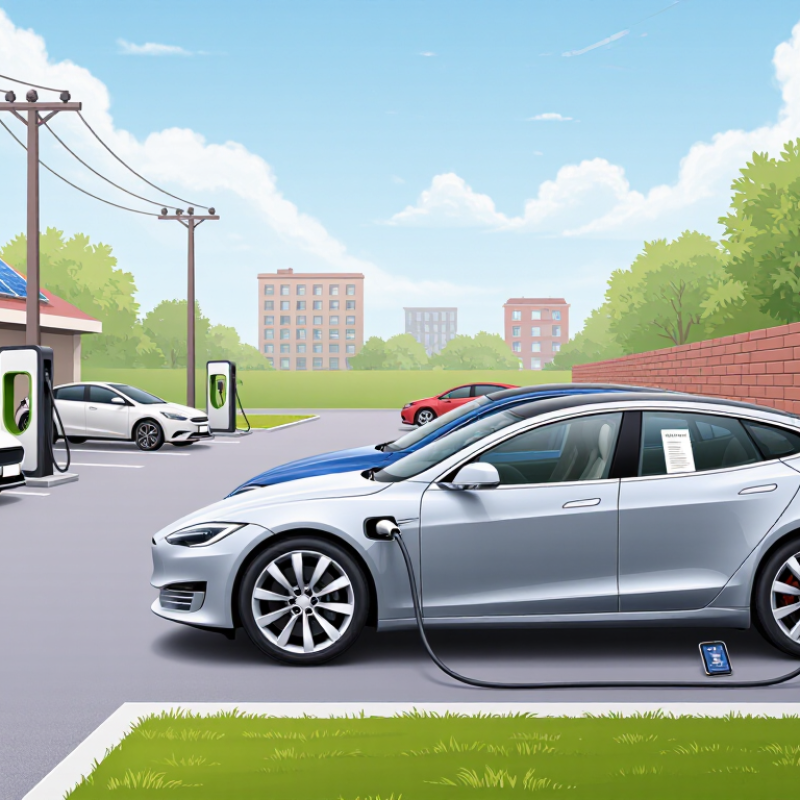
2026 Top Ways to Reduce Charging Costs for EV Owners
Understanding the Main Factors Behind EV Charging Costs
Charging an EV costs more than the electricity shown on a monthly bill. Your final price depends on energy rates, charging losses, equipment, and where the session occurs. Home charging usually offers clearer pricing, but installation can require wiring upgrades, permits, or a dedicated circuit. These upfront costs may take years to recover.
Time matters greatly. Many electricity plans charge less during overnight hours, when household demand falls. A smart timer can delay charging without filling the battery unnecessarily. However, low rates are not always available every night. Check the actual tariff, including fixed charges and seasonal changes.
Efficiency also affects every charging session. Cold weather, high speeds, heavy heating use, and an aging battery can increase energy consumption. Public chargers may add session fees, parking charges, or higher rates for faster service. Faster charging saves time, not always money.
Small details matter.
Keep tires properly inflated, because rolling resistance reduces driving efficiency. Avoid charging to the maximum level when daily travel needs are modest. Charging losses also vary by vehicle and power level, so advertised electricity prices can mislead. I once assumed the cheapest hourly rate guaranteed the lowest trip cost; that assumption deserves testing against real monthly usage. Track kilowatt-hours, fees, and mileage for several weeks. The result may challenge your expectations.
Charging a 60 kWh battery from 10% to 80% requires approximately 42 kWh of electricity. The chart estimates the energy cost under common charging settings using representative U.S. electricity rates. Charging during off-peak hours at home is generally the least expensive option, while DC fast charging is typically the most costly.
Assumption: 42 kWh per charging session. Rates are representative benchmarks based on typical U.S. residential, workplace, and public-charging price ranges; actual prices vary by location, tariff, taxes, and time of use.
Choosing the right charging location and time can reduce EV costs more than chasing a larger battery. Home charging is often the most predictable option, especially during overnight off-peak hours. Check your electricity bill for time-based rates before setting a schedule. A charge beginning at 11 p.m. may cost less than one starting at 6 p.m.
Workplace charging can also be economical, but confirm the rules. Some sites charge by energy, while others use time-based fees. Public fast charging saves travel time, yet its higher rate may not suit routine charging. Compare the full price per kilowatt-hour, connection fees, parking charges, and possible idle fees. A charger near a supermarket may seem convenient, but a longer shopping stop can quietly increase the bill.
Track three details for two weeks: charging location, start time, and total cost. This simple record can reveal patterns that a charging app misses. For example, a driver may discover that Saturday afternoon charging is expensive, even when the station looks quiet. Cold weather can also reduce charging efficiency and extend the session. That part is easy to underestimate. I would avoid relying on one “cheapest” schedule forever, because utility rates and driving needs change. Recheck the plan after a seasonal rate change or a new daily commute.
Home charging can turn an electric vehicle into a predictable household expense. The International Energy Agency’s Global EV Outlook 2024 identifies home charging as the main private charging method where drivers have access to it. The U.S. Energy Information Administration reported an average residential electricity price of 16.48 cents per kilowatt-hour in 2024. A 60-kilowatt-hour refill would therefore cost about $9.89 before charging losses. With 12% losses, the practical cost rises to roughly $11.07.
Use your utility’s time-of-use schedule, not guesswork. Many plans offer cheaper overnight electricity, but some use seasonal windows or flat pricing. Check the tariff each month. A smart charging schedule can delay charging until the lower-cost period and stop before the expensive window begins. Keep the battery limit near your daily needs. Charging fewer extra kilowatt-hours reduces wasted energy and battery stress.
A two-week charging log can reveal surprising habits. Record the start time, energy added, electricity rate, and outside temperature. Cold weather may increase energy use, weakening your savings estimate. If rooftop solar is available, midday charging can use more self-generated electricity. The Department of Energy’s Alternative Fuels Data Center notes that residential charging often avoids public-session fees, but installation and demand charges still matter. My own calculation would not treat every home charger as automatically cheap. A dedicated circuit, service upgrade, or high fixed fee can change the result. Check those costs before buying equipment.
Public charging costs depend less on the advertised energy price than on the payment plan behind it. A pay-as-you-go option suits occasional drivers, but its session fee can make a short top-up surprisingly expensive. Check energy rates, connection fees, parking charges, and idle-time penalties before plugging in. Small details matter.
Monthly memberships may reduce the price per kilowatt-hour for regular users. However, the subscription only pays off when your monthly charging volume exceeds its break-even point. Compare the membership fee with your usual driving pattern, not an ideal month. A driver charging twice weekly may benefit, while a holiday-period user may not. Read the fine print.
Payment flexibility also affects reliability. App payments often show live pricing and digital receipts, while contactless cards can work faster when a phone signal is weak. Keep two payment methods available. It helps. Some networks place temporary authorization holds on cards, which can confuse household budgeting. I have found that recording each session’s energy, total cost, and waiting time reveals the real value more clearly than a headline rate. Still, this method is imperfect because prices can change by location and time. Public charging plans should be reviewed every few months, especially after a commute, vehicle, or parking routine changes.
Reducing EV charging costs starts with understanding your own routine. Record the date, location, energy added, charging time, and price for every session. A simple spreadsheet can reveal expensive habits within weeks. I once assumed home charging was always cheapest. That was wrong. A higher evening rate made some sessions surprisingly costly.
Compare your charging records with local electricity tariffs. Many utilities offer lower overnight rates, but schedules and conditions vary. Check the current tariff instead of relying on old advice. Set charging timers during cheaper periods when practical. Avoid charging to the maximum level every day unless your driving requires it. The vehicle manual usually provides better guidance for battery care than online comments.
Track monthly energy use against distance traveled. This shows whether higher costs come from electricity prices, weather, traffic, or inefficient driving. Winter trips may consume more energy because of heating and reduced battery performance. Keep those conditions in your notes. Small details matter.
Review public charging receipts separately from home costs. Public sessions may include time-based fees, connection charges, or idle penalties. I have missed one fee because I checked only the energy price. That mistake changed the real cost of a short stop. Revisit your records every three months, and adjust your charging schedule when rates, commuting patterns, or household usage changes.
| Cost Area | What to Track | Realistic Benchmark or Range | Recommended Cost-Control Action | Potential Financial Effect | Tracking Frequency |
|---|---|---|---|---|---|
| Charging Location | Energy purchased at home, public AC stations, and DC fast chargers | Home charging is commonly less expensive than public charging; public DC fast charging often has the highest energy price | Use home charging for routine energy needs and reserve public fast charging for longer trips or time-sensitive situations | Moving 1,000 kWh per year from a $0.50/kWh public rate to a $0.15/kWh home rate can reduce energy cost by about $350 before taxes or fees | Monthly |
| Time-of-Use Scheduling | Charging start time, electricity rate period, and total kWh charged | Off-peak electricity rates may be 20%–60% lower than peak rates, depending on the local tariff | Schedule charging during the lowest-cost tariff window while maintaining the required departure state of charge | Charging 3,000 kWh annually at $0.12/kWh instead of $0.25/kWh saves approximately $390 per year | Every billing cycle |
| Charging Efficiency | Energy delivered to the battery compared with energy drawn from the meter | AC charging commonly has approximately 10%–15% total energy loss, depending on temperature, power level, and vehicle efficiency | Reduce unnecessary preconditioning while plugged in, avoid extremely low or high battery temperatures when practical, and use efficient scheduled charging | Reducing charging losses from 15% to 10% on 3,000 kWh of delivered battery energy saves roughly 167 kWh of purchased electricity | Quarterly |
| DC Fast-Charging Dependence | Number of fast-charging sessions, kWh per session, and session price | Frequent high-power charging can cost more per kWh than home AC charging and may include time, connection, or idle fees | Plan trips around a practical starting state of charge and combine fast charging with lower-cost overnight charging | Replacing 500 kWh of DC fast charging at $0.55/kWh with home charging at $0.15/kWh saves about $200 annually | After every long trip |
| Battery State-of-Charge Planning | State of charge at departure, arrival, and charging session end | Daily commuting usually requires less energy than a full battery; charging only the energy needed can reduce unnecessary peak-period charging | Set a target that covers the next trip plus a reasonable reserve instead of charging to 100% by default | A 60 kWh battery charged with 20 kWh less energy per week avoids about 1,040 kWh of annual electricity purchases, if that energy is not required for driving | Weekly |
| Driving Efficiency | Vehicle energy consumption in kWh per 100 km or kWh per mile | Many EVs consume approximately 15–30 kWh per 100 km, with speed, temperature, tires, terrain, and climate control affecting results | Use smooth acceleration, maintain correct tire pressure, reduce unnecessary cargo, and limit high-speed driving when practical | Improving consumption from 22 to 20 kWh per 100 km over 15,000 km saves 300 kWh per year; at $0.20/kWh, that is about $60 | Monthly or every 1,000 km |
| Seasonal Energy Use | Monthly kWh per distance and outdoor temperature | Cold weather can increase energy consumption because of cabin heating, battery conditioning, and reduced regenerative braking | Precondition the cabin while connected to the charger, use seat or steering-wheel heating where available, and combine errands in cold weather | A 10% reduction in winter energy use across 1,200 kWh can save 120 kWh, worth about $24 at $0.20/kWh | Monthly during winter |
| Home Charger Power Level | Charging power, charging duration, and electricity tariff | A typical Level 2 home charger operates near 7.2 kW, although actual power varies by vehicle, circuit, and equipment | Choose a charging power that meets daily driving needs; higher power does not automatically reduce energy cost and may require electrical upgrades | Avoiding an unnecessary $1,000 electrical upgrade can provide greater financial benefit than installing a higher-power circuit for occasional use | Review once before installation |
| Subscription and Session Fees | Monthly plans, connection fees, idle fees, and payment surcharges | Public charging costs may combine a per-kWh rate with time-based or session-based charges | Compare the total monthly bill with the pay-as-you-go cost and cancel a plan when the recurring discount does not exceed its fee | A $10 monthly plan should generally provide more than $10 in monthly charging discounts to be financially worthwhile | Monthly |
| Trip and Route Planning | Charging stops, expected energy use, station price, and detour distance | A detour adds fuel-free but still measurable electricity use, travel time, and possible charging fees | Compare the full trip cost rather than selecting a station solely by its advertised energy price | A low-price station is not necessarily cheaper if a 20 km detour adds approximately 4–6 kWh of vehicle consumption and additional travel time | Before each long trip |
| Monthly Cost Dashboard | Total charging cost, total kWh, distance driven, and average cost per distance unit | Useful metrics include cost per kWh, cost per 100 km, home-charging share, and fast-charging share | Record all charging sources in one spreadsheet or vehicle log and compare the latest three-month average with the previous period | A consistent record helps identify tariff changes, rising fast-charging dependence, and seasonal efficiency losses before they materially increase annual cost | Monthly |
| Calculation basis: Illustrative examples use 15,000 km of annual driving, an EV consumption range of approximately 20–22 kWh per 100 km, and electricity prices shown in U.S. dollars per kWh. Actual savings vary by local electricity tariffs, taxes, public-charging fees, vehicle efficiency, climate, driving pattern, and battery-conditioning requirements. Always verify current local rates before making a charging or electrical-installation decision. | |||||
Check the energy rate, session fee, parking charge, and idle-time penalty. Small fees can make a short top-up expensive.
Usually, yes. It avoids a monthly commitment, but a session fee may outweigh the energy cost.
Compare the subscription fee with your normal monthly charging volume. Regular users may save, while holiday-period users may not.It depends.
Keep an app payment and a contactless card. A card may work faster when phone service is weak.
Some charging networks place temporary authorization holds. These holds may confuse household budgeting before the final charge appears.
Record the date, location, energy added, charging time, total cost, and waiting time. A basic spreadsheet can reveal costly habits.
Not always. Evening electricity rates may be higher, while overnight rates could be lower. Check the current tariff.My assumption was wrong.
Winter heating, cold batteries, traffic, and weather can increase energy use. Compare monthly energy consumption with distance traveled.
Review them every three months. Recheck after a commute, vehicle, parking routine, or electricity tariff changes.Do not trust old advice.
Reducing EV charging expenses begins with understanding the factors that influence cost, including electricity rates, charging speed, battery size, and charging location. Learning how to choose lower-rate periods, such as off-peak hours, can make a significant difference. Home charging is often more affordable when drivers schedule charging during cheaper time windows, avoid unnecessary high-power charging, and maintain efficient daily charging habits. Comparing electricity plans and checking available local pricing options can also help reduce regular expenses.
Public charging may still be necessary, so EV owners should compare pay-as-you-go rates, memberships, subscriptions, and session fees before selecting an option. Keeping records of charging times, locations, energy use, and monthly spending makes it easier to identify costly habits and improve long-term efficiency. By combining smart timing, thoughtful location choices, suitable payment plans, and consistent tracking, drivers can develop a practical strategy for how to reduce charging costs for ev owners while supporting convenient and reliable electric driving.

Zap Charger