Choosing an EV charger is rarely about speed alone. It is about your parking space, driving pattern, budget, and tolerance for installation work. A portable unit may fit a renter who changes locations or travels with a compact cable in the trunk. A fixed charger may suit a homeowner who returns to the same driveway every evening.
The real question is how to choose between portable and fixed charging solutions without paying for features you will not use. Tom Moloughney, an electric vehicle charging educator and reviewer, offers a practical principle: “The best charging setup is the one you will actually use.” Convenience matters more than impressive specifications.
That sounds simple. It is not always simple.
A portable charger can be easy to store, but its outlet may heat during long sessions. A fixed wall unit looks cleaner and often delivers steadier performance, yet installation can require an electrician, suitable wiring, and permission from a landlord or building manager. These details matter beside a real garage, not just on a product page.
This guide examines seven practical ways to compare both options. It considers charging frequency, cable length, weather exposure, electrical capacity, portability, safety features, and long-term cost. Some drivers may still choose differently after reviewing the evidence. That is acceptable.
The perfect solution may not exist. The useful one usually does.
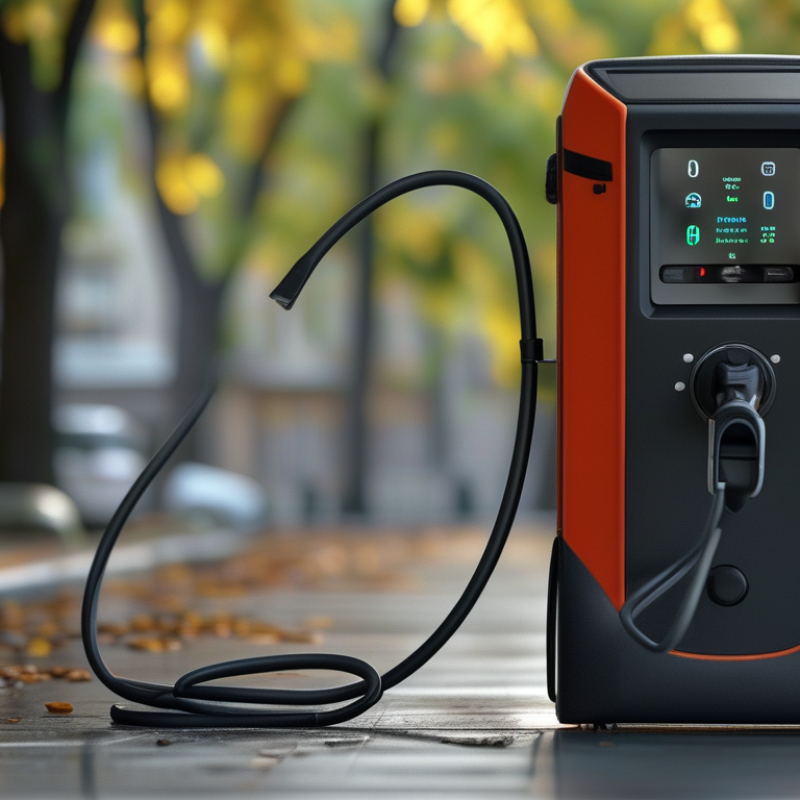
Choosing portable or fixed charging starts with observation, not product features. Record daily distance, parking hours, outlet access, weather exposure, and future vehicle plans. The IEA Global EV Outlook 2024 reported nearly 14 million electric cars sold globally in 2023. Charging routines are no longer theoretical. If your vehicle rests overnight, fixed AC charging may provide predictable replenishment. If parking changes weekly, portable equipment offers practical flexibility. Keep it simple.
Estimate energy demand from actual driving. A 40-mile commute may require roughly 10–14 kWh, assuming 3–4 miles per kWh. Check the vehicle manual, because efficiency changes with speed, temperature, cargo, and heating.
The U.S. Department of Energy’s Alternative Fuels Data Center lists Level 1 charging at about 2–5 miles per hour. Level 2 can provide roughly 10–60 miles per hour. These ranges reveal a common mistake: choosing by peak speed alone.
Portable charging may suit short trips and long parking periods. Fixed charging helps when several drivers share one space.
Inspect the environment before deciding. Measure cable distance, rain exposure, ventilation, access control, and electrical capacity. A qualified electrician should verify the circuit, grounding, and load.
The IEA notes that home charging remains central in many markets, while apartments create different constraints. Fixed charging reduces daily handling, but cannot repair an unsuitable circuit.
Portable charging adapts better, though wet storage and shared outlets require discipline. I once underestimated winter charging losses. That assumption needed a margin, not confidence. Recheck your plan after two weeks of real use.
7 Best Ways to Choose Portable or Fixed Charging Solutions?
Portability matters when parking changes daily. A portable charger fits a trunk, rental home, or temporary worksite. It usually needs less installation, but cable placement can become awkward. The International Energy Agency reported more than four million public charging points worldwide in 2023. That growth does not remove the need for private access.
Fixed charging suits predictable parking. A wall-mounted unit can keep cables tidy and reduce daily handling. However, installation may require circuit checks, wall clearance, weather protection, and professional electrical work. The U.S. Department of Energy’s Alternative Fuels Data Center identifies Level 1 charging as typically using a 120-volt outlet. Level 2 commonly requires 208–240 volts. Your existing electrical capacity matters more than the charger’s advertised speed.
Measure the space before choosing. Leave room for the vehicle door, cable bend, ventilation, and safe walking paths. A compact portable unit may occupy less wall space, yet its cable can cross the floor. A fixed unit may occupy one wall section but preserve cleaner movement. I would not assume portability always means convenience. In a narrow garage, it may create repeated setup work. In a shared parking area, fixed installation may be impractical or restricted. The IEA also notes that charging demand varies strongly by location, so usage patterns deserve honest review. People often overestimate future driving. That mistake wastes space.
Comparison of portability, installation effort, charging output, and space requirements using typical residential EV charging benchmarks.
Typical benchmark values: portable charging at 3.6 kW, fixed charging at 7.4 kW, approximately 0.25 versus 4 hours for setup, and approximately 0.03 versus 0.12 m² of equipment footprint. Actual figures vary with electrical capacity, cable length, local regulations, and installation conditions.
Choosing between portable and fixed charging solutions starts with usable power, not advertised maximum output. A portable unit may list 100 watts, but heat, battery level, and cable quality can reduce its real performance. Check the device’s required wattage and leave some headroom. Small margin, fewer interruptions.
Compatibility matters just as much. Match the charger’s voltage, current, connector, and charging protocol with your device. A suitable connector does not guarantee safe or fast charging.
Some cables support high power, while others limit the connection to basic charging.
I once assumed a thicker cable would charge faster. That assumption was wrong. The cable’s specification mattered more than its appearance.
Charging speed also depends on battery condition and temperature.
A fixed charger usually offers steadier output for desks, workshops, or shared spaces. Portable equipment suits travel, field work, and emergency top-ups, but its internal battery needs regular monitoring.
Test the setup with your actual device, not only the packaging figures. Time the charge from 20 to 80 percent, then repeat it under normal conditions. Results may vary.
Look for overheating, loose connections, or unexpected power drops. A solution that charges quickly but becomes uncomfortable to touch deserves closer review.
Check safety markings and follow local electrical requirements before installation.
Choosing between portable and fixed charging solutions requires more than comparing convenience. Safety features should match the environment, electrical load, and frequency of use. Look for overcurrent protection, temperature monitoring, grounding protection, and secure connectors. A fixed unit may need professional installation and a dedicated circuit. Portable equipment still needs a suitable outlet and stable placement.
Durability depends on daily conditions. Check the enclosure rating for dust and water exposure, especially in garages or outdoor areas. Strong cable insulation, strain relief, and a locking mechanism can prevent damage during repeated handling. I once underestimated cable wear because the outer layer looked acceptable. A small crack near the connector later required immediate replacement. Appearance can mislead.
Maintenance should be practical, not theoretical. Inspect cables before use, remove dust from ventilation openings, and keep connectors dry and clean. Fixed systems may require scheduled electrical checks, while portable units need careful storage without tight bends. Follow the manufacturer’s inspection intervals and stop using equipment after heat damage, unusual odors, or repeated fault warnings. I used to check only the charging speed. That was a poor habit. Safety records, installation guidance, and accessible replacement parts often reveal more about long-term reliability than technical features alone.
Choosing a portable or fixed charging solution depends on more than the purchase price. A portable unit may cost less initially and suits renters, occasional drivers, or homes without dedicated parking. However, it can charge more slowly and requires careful cable storage. A fixed charger usually needs professional installation, but it offers a cleaner setup, stronger daily convenience, and potentially better charging performance.
Think beyond today’s vehicle. A fixed system may deliver greater long-term value if your driving increases or your household adds another electric vehicle. Ask an electrician to inspect the electrical panel, cable route, outdoor protection, and available capacity. This prevents expensive surprises later. A portable option offers flexibility when moving homes, traveling, or using different charging locations. Still, connectors can loosen, cables can suffer damage, and regular inspection is easy to forget. I have seen people focus too heavily on the cheapest option, then pay more for upgrades later. That mistake is understandable, but worth questioning.
Tips: Compare installation, maintenance, energy use, and replacement costs over five years. Check whether the system supports future power upgrades or interchangeable cables. Measure your parking distance before buying; a short cable quickly becomes frustrating. Keep portable equipment dry, clean, and secured from vehicle traffic. If your needs are uncertain, choose flexibility first, but do not confuse flexibility with indefinite postponement.
| Decision Dimension | Portable Charging Solution | Fixed Charging Solution | Best Planning Insight |
|---|---|---|---|
| 1. Upfront Cost | Usually lower when an appropriate outlet already exists. Additional costs may apply for a dedicated circuit, adapter, weather protection, or storage. | Usually higher because installation may include wiring, circuit protection, mounting, permits, and labor. | Choose portable charging when avoiding installation work is more valuable than convenience. Choose fixed charging when the location will be used regularly for several years. |
| 2. Charging Power and Speed | Portable AC charging commonly ranges from about 1.4–1.9 kW on a standard 120 V outlet to approximately 3.6–9.6 kW on suitable 240 V circuits. | Residential fixed AC chargers commonly deliver about 7.2–11.5 kW, subject to the vehicle, electrical service, circuit rating, and local requirements. | Estimate charging time from usable battery capacity divided by charging power, then allow for charging losses and vehicle limits. |
| 3. Installation and Setup | Plug-and-use when the outlet is correctly rated. A qualified electrician should verify circuit capacity, grounding, outlet condition, and continuous-load suitability. | Requires permanent mounting and electrical installation. The work can be more complex if the panel is distant, undersized, or difficult to access. | Do not treat an existing household outlet as automatically suitable for continuous EV charging. |
| 4. Portability and Travel Flexibility | Can be carried between homes, workplaces, campsites, or temporary residences when compatible outlets are available. | Designed for one primary location and is not practical to move frequently. | Portable equipment is more suitable for renters, frequent travelers, and households with changing parking locations. |
| 5. Convenience and Daily Use | Requires cable handling, storage, and repeated connection. Outdoor use also requires suitable weather protection and safe cable routing. | Offers a dedicated parking position, easier cable management, and faster connection for routine overnight charging. | For charging several times per week at the same parking space, convenience can outweigh the higher initial expense. |
| 6. Long-Term Value and Maintenance | Lower fixed infrastructure commitment, but connectors, plugs, and cables experience more handling and may require inspection or replacement. | Higher initial investment, but reduced daily handling and a more consistent installation can support long-term convenience and reliability. | Compare total cost over the expected ownership period, including installation, maintenance, electricity, and potential relocation. |
| 7. Future Flexibility and Expansion | Easy to relocate or replace, but available charging speed remains dependent on the outlets and circuits at each destination. | A properly sized circuit and conduit may support future equipment upgrades, load management, or a second charging position, subject to electrical capacity. | Plan for future vehicle battery sizes, additional vehicles, solar integration, and electrical-service limitations before selecting the installation. |
Note: Charging power, installation requirements, electrical standards, permits, and total costs vary by vehicle, property, local regulations, and available electrical capacity. Actual charging speed may be limited by the vehicle or the charging equipment.
: Track daily distance, parking hours, outlet access, and weather exposure. Portable charging suits changing parking locations and temporary homes. Fixed charging suits predictable overnight parking. Measure twice.
A 40-mile commute may use roughly 10–14 kWh. Actual demand changes with temperature, speed, cargo, and heating. Slow charging can work with long parking periods. Peak speed is not everything.
Choose portable charging when you rent, travel, or change parking regularly. It fits a trunk and needs less permanent installation. However, cables may cross walkways or require repeated setup. Convenience can become repetitive work.
Fixed charging works well with regular overnight parking. It keeps cables organized and reduces daily handling. It may support heavier future use or multiple drivers. Installation restrictions can change the answer.
Check the electrical panel, grounding, circuit capacity, cable route, and wall clearance. Inspect rain exposure and ventilation around the charging location. A qualified electrician should verify the installation. Do not guess.
Leave room for doors, cable bends, ventilation, and safe walking paths. A wall unit can preserve floor space. A portable unit may create loose cables across the floor. Narrow garages expose this problem quickly.
Portable charging often costs less initially. Fixed charging may offer better daily convenience after installation. Compare equipment, installation, maintenance, energy use, and replacement costs over five years. The cheapest choice can become expensive later.
Consider longer commutes, a new home, or another electric vehicle. Portable equipment offers easier relocation. Fixed systems may support higher future demand. Do not postpone forever.
Keep cables dry, clean, secured, and away from vehicle traffic. Inspect connectors for looseness or visible damage. Store equipment safely after use. I would probably forget sometimes, so a simple routine helps.
Choosing the right charging setup begins with understanding how, where, and how often you use it. To learn how to choose between portable and fixed charging solutions, consider whether you need charging flexibility across multiple locations or a dependable station in one dedicated place. Portable options are convenient for travel, temporary workspaces, and changing needs, while fixed systems may provide better organization, higher capacity, and a more permanent installation. Available space, installation requirements, and ease of relocation should also influence your decision.
Next, compare power output, device compatibility, and expected charging speed to ensure the solution meets your daily demands. Safety protections, weather resistance, construction quality, and maintenance requirements are equally important for reliable long-term use. Finally, look beyond the initial purchase price by considering installation expenses, operating costs, durability, and the possibility of future upgrades. A well-balanced choice should deliver practical performance today while remaining flexible enough to support changing equipment and usage habits.

Zap Charger