China Top 10 EV Chargers How to Choose the Right Power?

Time:2026-11-20 Author:Sienna
0%

Choosing among China’s top 10 EV chargers is not simply a contest in kilowatts. The right choice depends on your vehicle, parking setup, and daily driving. A charger rated at 22 kW cannot make every car charge at that speed. The vehicle’s onboard AC charger sets a limit. Check that figure before comparing product labels.

For how to select the right charging power level, EV charging reviewer Tom Moloughney offers a useful principle, paraphrased from his practical guidance: match the charger to the vehicle’s capabilities and your real charging routine. It sounds simple. It is easy to overlook. A commuter who parks overnight may do well with a 7 kW home charger, while a shared workplace may benefit from higher output and several charging points. DC fast chargers are a different category; vehicle compatibility and charging curves matter, not just peak power.

Look at installation conditions, connector compatibility, cable reach, safety features, and after-sales support alongside power. A display showing high output means little if your home supply cannot support it. Think of a rainy evening, a car parked several meters from the wall, and a cable that barely reaches. Small details shape daily use. This comparison will introduce leading Chinese EV charger options and explain where each power level makes sense. The guide is not a substitute for checking your vehicle manual or consulting a qualified installer. It is a starting point—and some choices may still require a second look.
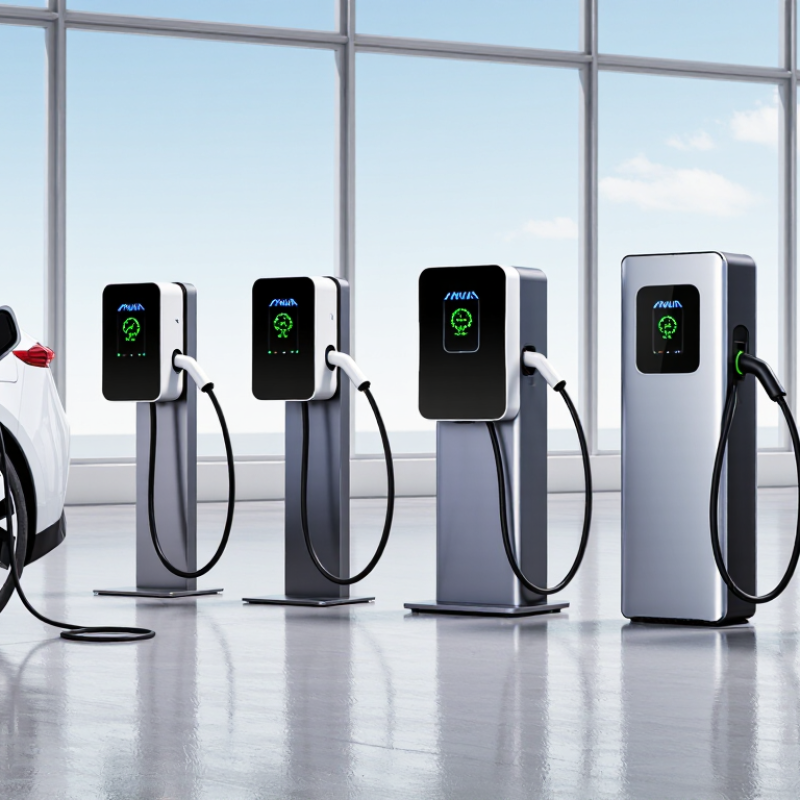
China Top 10 EV Chargers How to Choose the Right Power?

Understanding EV Charger Power Ratings and Charging Speeds

An EV charger’s power rating, measured in kilowatts (kW), describes its maximum output—not the speed every vehicle will receive. The U.S. Department of Energy’s Alternative Fuels Data Center places common Level 2 equipment at 2.5–19.2 kW, while DC fast chargers typically range from 50 to 350 kW. More power can mean shorter stops. But only when the car can accept it.

The vehicle’s onboard charger limits AC charging, while battery temperature, state of charge, and station load can reduce actual speed. A 2024 International Energy Agency report notes that public fast-charger capacity is expanding rapidly, yet charger labels alone cannot predict a driver’s wait. Check your vehicle’s maximum AC and DC charging rates before comparing equipment. At home, a 7 kW unit may be practical for overnight charging; on a road trip, higher-power DC charging may save time if the vehicle supports it. Small catch: charging speed often falls as the battery fills. Ratings can feel more precise than real life.

Comparing the Top 10 EV Chargers Available in China

Comparing the Top 10 EV Chargers Available in China means comparing more than peak power. The International Energy Agency’s Global EV Outlook 2024 reports that China held about 70% of the world’s public charging points in 2023, including roughly 85% of public fast chargers. That scale creates many choices, but a high kilowatt rating alone does not guarantee a quick stop. Check whether the vehicle can accept that power, and compare charging curves, connector compatibility, operating temperature, and uptime. Small print matters.

For home use, a 7 kW unit may suit overnight charging; shared parking often benefits from load management. For highway stops, compare 120–250 kW options, while remembering that vehicle limits and battery temperature can reduce actual output. The National Energy Administration reported 12.82 million charging facilities in China by the end of 2024, including public and private equipment. When comparing ten shortlisted units, record rated power, protection features, service coverage, and verified field performance—not just brochure figures. A charger that runs reliably in rain and summer heat may beat a faster model with weak support. Rankings can shift by location, and public performance data remains uneven.

China Top 10 EV Chargers: How to Choose the Right Power? — Comparing 10 Common EV Charger Options Available in China
Option Rated Output Typical Electrical Supply Connector Standard Typical Use What to Check Before Choosing
1. Portable AC charger About 3.5 kW 220 V single-phase, approximately 16 A GB/T 20234.2 AC Occasional charging or locations where a lower-power supply is preferred. Confirm the vehicle’s AC inlet compatibility, circuit capacity, grounding, and whether the outlet is suitable for continuous charging.
2. Basic wall-mounted AC charger About 7 kW 220 V single-phase, approximately 32 A GB/T 20234.2 AC Home or workplace charging when a compatible dedicated circuit is available. Check the vehicle’s onboard AC charging limit and have the electrical circuit and protection devices assessed by a qualified installer.
3. Three-phase AC charger About 11 kW 380 V three-phase, approximately 16 A per phase GB/T 20234.2 AC Homes, workplaces, or parking facilities with three-phase power and vehicles that support higher AC charging. Verify three-phase availability and the vehicle’s maximum AC input; the charger cannot make a vehicle accept more power than it supports.
4. High-output AC charger About 22 kW 380 V three-phase, approximately 32 A per phase GB/T 20234.2 AC Commercial parking or sites with suitable three-phase infrastructure. Check the site’s supply capacity, installation requirements, and vehicle AC charging limit. Many vehicles will charge below the charger’s rated output.
5. Entry-level DC fast charger About 30 kW DC output; input supply depends on the equipment design GB/T 20234.3 DC Fleet depots, smaller sites, or charging locations with lower power demand. Confirm DC compatibility, rated voltage and current range, site capacity, and whether power is shared between connectors.
6. Standard DC fast charger About 60 kW DC output; input supply depends on the equipment design GB/T 20234.3 DC Public charging sites and commercial locations seeking moderate DC charging power. Compare the charger’s output range with the vehicle’s DC charging curve, not just its peak power rating.
7. Mid-power DC fast charger About 120 kW DC output; input supply depends on the equipment design GB/T 20234.3 DC Public stations and fleet sites serving vehicles capable of higher-rate DC charging. Check connector compatibility, vehicle acceptance limits, cooling requirements, and how output is allocated when multiple vehicles charge.
8. High-power DC fast charger About 180 kW DC output; input supply depends on the equipment design GB/T 20234.3 DC High-turnover public charging locations and routes with substantial charging demand. Verify the vehicle’s supported voltage and current range; actual charging power varies with battery temperature and state of charge.
9. Ultra-high-power DC charger About 250 kW DC output; input supply depends on the equipment design GB/T 20234.3 DC High-capacity public charging sites serving compatible vehicles. Assess grid capacity, site load management, cable cooling, and vehicle compatibility. A 250 kW rating does not guarantee that every vehicle will draw 250 kW.
10. Very-high-power DC charger About 350 kW DC output; input supply depends on the equipment design GB/T 20234.3 DC Major charging hubs and locations designed for high power demand and compatible vehicles. Confirm the vehicle can use the charger’s output range, and check grid connection, power sharing, thermal management, and installation requirements.

Note: These are representative power options, not a brand ranking or a claim of market share. GB/T 20234.2 covers conductive AC charging connections, and GB/T 20234.3 covers conductive DC charging connections in China. Actual charging power depends on the vehicle, battery condition and temperature, state of charge, charger configuration, and available site power.

Matching Charger Power to Your Vehicle and Battery

China’s EV charging market offers many power ratings, but a bigger number does not automatically mean faster charging. Match the charger to your vehicle’s limits and your battery’s daily needs. For AC charging, the car’s onboard charger sets the practical ceiling. A 7 kW wall unit cannot deliver 11 kW if the vehicle accepts only 7 kW AC. Check the vehicle manual, not just the charger label. That matters.

For a rough estimate, a 60 kWh battery charged from 20% to 80% needs about 36 kWh. At 7 kW, that takes just over five hours in ideal conditions; real charging takes longer because of losses. DC fast charging works differently. The vehicle controls how much power it can accept, and output often falls as the battery fills or gets cold. A 120 kW station may deliver far less than 120 kW for much of a session. Check connector and charging-protocol compatibility, too.

Think about routine use. Overnight home charging may suit a modest AC unit, while frequent highway trips can make higher-power DC access valuable. Still, buying the highest rating “just in case” may mean paying for capacity your car rarely uses. Peak figures are tempting, and it is easy to overvalue them. Daily charging patterns tell a more useful story.

Choosing EV Charger Power: Match It to Your Battery and Vehicle

Estimated time to charge from 20% to 80% for representative 40, 60, and 80 kWh batteries. Estimates assume the vehicle’s onboard AC charger can accept the selected power and 90% charging efficiency. Actual charging times vary by vehicle, temperature, and charging conditions.

The estimates use: charging time = battery capacity × 60% ÷ (charger power × 90%). A vehicle’s onboard AC charging limit can restrict the power it receives, even when the charger is rated higher.

Choosing Between Home, Workplace, and Public Charging

Choosing charging power starts with parking time, not the largest number on a charger. At home, overnight parking makes a Level 2 unit practical for many drivers. The U.S. Department of Energy’s Alternative Fuels Data Center estimates that Level 2 charging adds about 10–20 miles of range per hour. A daily commute can often be replenished while the car sits in the garage. Check your vehicle’s onboard charging limit before paying for extra capacity.

Workplaces suit slower charging when cars stay parked for several hours. Shared Level 2 units, with managed power, can serve more employees than a few high-output stalls. Public DC fast charging fits travel stops and drivers without reliable home access. The International Energy Agency’s Global EV Outlook 2024 reported about four million public charging points worldwide at the end of 2023, up 40% from 2022. Fast-charger numbers grew even quicker. That is useful context, not a promise of easy access nearby.

A charger’s advertised power is not always the power your car receives. Battery temperature, charge level, and the vehicle’s own limit can slow a session. Peak output can look impressive on paper. I would compare expected parking time, local availability, and installation costs before choosing. It is easy to overbuy power for a car that spends most nights parked.

Checking Electrical Capacity, Safety, and Installation Requirements

Choosing an EV charger begins at the electrical panel, not with the highest advertised kilowatt rating. The U.S. Department of Energy’s Alternative Fuels Data Center lists Level 2 equipment at roughly 2.9–19.2 kW and 208–240 volts. Higher output can shorten charging time, but only if the home’s service and wiring can support it.

A 7.2 kW unit draws about 30 amps at 240 volts. Check the panel’s main rating, spare breaker spaces, and existing loads before selecting power.

A qualified electrician can measure available capacity and inspect the panel, grounding, and cable route. Keep the charger close to the parking space. Long cable runs may add cost and voltage drop.

Under common North American electrical sizing practice, continuous EV charging loads require circuit capacity above the charger’s operating current; a 32-amp charger commonly needs a 40-amp circuit. Local requirements vary. Do not treat an empty breaker space as proof of spare capacity.

The IEA’s Global EV Outlook 2024 reports that public charging points grew by about 40% in 2023, highlighting rapid infrastructure expansion. Yet a home installation needs its own assessment. Ask whether load management could avoid a service upgrade, and confirm outdoor equipment has suitable weather protection.

Small details matter. A neat cable path today can still become a trip hazard beside a garage door. Recheck assumptions before installation.

FAQS

How do I choose the right charger power for my vehicle?

Check your vehicle manual for its maximum AC charging rate. A 7 kW charger cannot supply 11 kW to a car limited to 7 kW. The manual matters more than the label.

How long might home charging take?

A 60 kWh battery needs about 36 kWh to go from 20% to 80%. At 7 kW, that takes just over five hours in ideal conditions. Real sessions take longer.

Does a high-power public charger always charge faster?

No. The car controls how much power it accepts, and charging may slow as the battery fills or gets cold. Peak numbers can mislead.

Is a home charger suitable for overnight parking?

Often, yes. A Level 2 charger can add roughly 10–20 miles of range per hour. Check the vehicle’s onboard charging limit before paying for extra capacity.

What charging setup works for a workplace?

Shared Level 2 chargers can suit cars parked for several hours. Managed power may let more employees charge. A few fast chargers are not always the better choice.

When is public DC fast charging useful?

It can help during highway stops or when home charging is unavailable. Check connector compatibility and nearby access. Availability varies.

What should I check before installing a home charger?

Have a qualified electrician inspect the panel, wiring, grounding, and cable route. An empty breaker space does not prove spare capacity. Do not guess.

Can load management reduce installation costs?

It may help avoid a service upgrade, depending on your home’s electrical capacity. Ask an electrician to assess it. I’d still check the assumptions twice.

Conclusion

Choosing the right EV charger in China starts with understanding how power ratings affect charging speed. Higher-power chargers can shorten charging times, but the best option depends on your vehicle’s maximum charging capability, battery size, and typical driving needs. Comparing available charger types and power levels can help you identify a practical choice without paying for capacity your vehicle cannot use.

Consider where you will charge: home, the workplace, or public stations. Each setting has different usage patterns and installation needs. Before making a decision, check your electrical supply, the charger’s safety features, and whether installation requirements can be met. Together, these factors explain how to select the right charging power level for reliable, convenient charging that fits your vehicle and routine.

Sienna

Sienna

Sienna is a skilled marketing professional with a deep expertise in our company’s core products and services. With a passion for innovation and detail, she plays a pivotal role in crafting insightful blog posts that not only highlight the unique features of our offerings but also provide valuable......