As the world shifts towards sustainable energy solutions, electric vehicles (EVs) are gaining traction. A critical aspect of this evolution lies in understanding "what is the difference between AC and DC charging." According to a report by the International Energy Agency (IEA), EV sales increased by 43% in 2020, signaling a growing demand for efficient charging infrastructure.
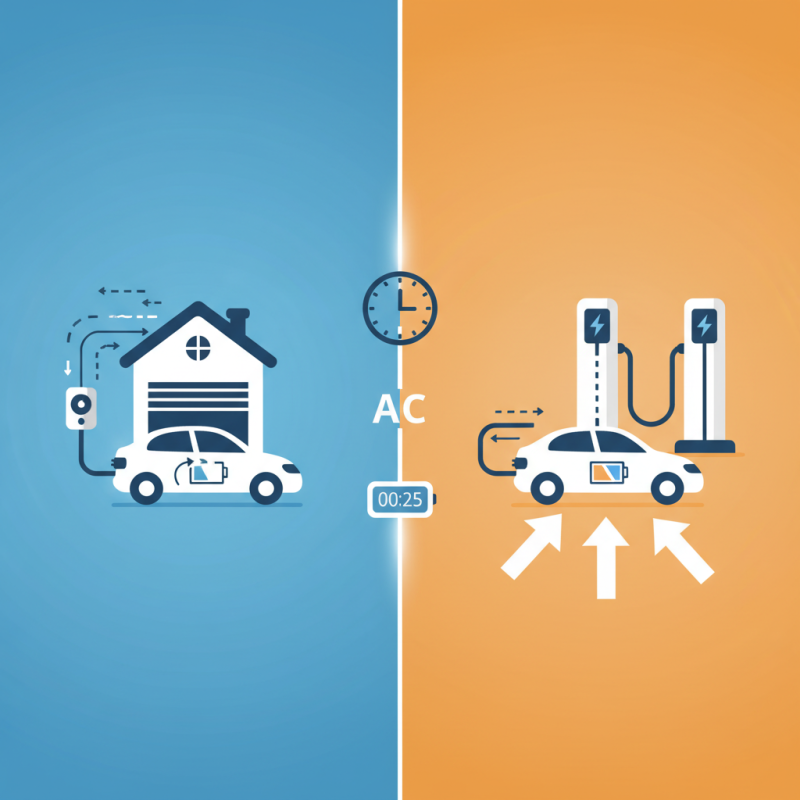
AC (Alternating Current) and DC (Direct Current) charge different types of batteries and impact charging times. AC charging is typically slower and more common in residential settings. It utilizes onboard chargers that convert AC to DC, resulting in longer charge times. In contrast, DC charging delivers power directly to the battery, significantly reducing charging times, making it ideal for fast-charging stations. Research indicates that DC chargers can recharge an EV in under 30 minutes, while AC options may take several hours.
Understanding these differences is essential for EV users and industry stakeholders. With charging infrastructure evolving rapidly, recognizing these distinctions will help consumers make informed decisions. However, navigating this landscape can be challenging. As technologies advance, continued education is vital for maximizing the benefits of EV ownership and contributing effectively to the green transition.
Understanding AC Charging: Definition and Basics
AC charging, or alternating current charging, is a common method for powering electric vehicles (EVs). It uses the standard electricity supply for homes and businesses. The energy supplied through AC can be utilized directly by the vehicle's onboard charger. This process converts AC to direct current (DC), which then charges the vehicle’s battery.
Understanding the basics of AC charging reveals its advantages. It allows for slower, overnight charging at home. The systems are generally less expensive and simpler than DC fast chargers. However, they may require extended charging times. Depending on the vehicle, it can take several hours to fully charge. This means it's not always practical for long trips where time is a factor.
While AC charging is reliable, it does come with some limitations. The charging speed is significantly slower than DC charging. Users must plan their charging around available time. Not everyone understands the vast differences between AC and DC. This gap in knowledge may lead to frustration when choosing a charging method for their electric vehicle.
Understanding DC Charging: Definition and Basics
DC charging, or direct current charging, provides a streamlined option for electric vehicles. Unlike its AC counterpart, which converts electricity at the vehicle, DC charging delivers power directly to the battery. This means faster charging times and less energy loss, making it a popular choice for public charging stations. Many drivers appreciate the convenience of quick turns at charging points, allowing for minimal downtime.
Understanding the basics of DC charging is crucial for EV users. In a typical setting, DC stations deliver high voltage and current directly. This results in charging times that can be significantly shorter than AC charging options. However, users should also consider the limitations. Not all EVs can handle high-speed DC charging, which may lead to compatibility issues. It's essential to check vehicle specifications and charging networks before making a quick pit stop.
While DC charging stations are growing in number, access may not be uniform everywhere. Drivers in rural areas may struggle to find reliable DC outlets, which can create unexpected challenges. As the industry evolves, there remains room for improvement in infrastructure and technology. Awareness of these variables can lead to a more informed charging experience.
Key Differences Between AC and DC Charging
When it comes to electric vehicle charging, understanding the difference between AC and DC charging is essential.
AC charging uses alternating current. It's the type of electricity found in homes. This method typically takes longer to charge your vehicle. You can find AC chargers in public areas and at home. They are generally more accessible and less expensive to install.
On the other hand, DC charging relies on direct current. It delivers power more quickly, making it ideal for fast charging stations. DC chargers convert the electricity on-site, which can significantly reduce charging times. However, they are more expensive and complex to install. As a result, you will find them mainly along major highways or in select urban centers.
Both charging types serve unique needs. AC charging suits daily use, while DC charging is more for long trips. Understanding your charging habits can help you choose the right option. It may take time to evaluate which fits your lifestyle. Exploring different sites and chargers can make a difference.
Advantages and Disadvantages of AC Charging
AC charging, or alternating current charging, is widely used for electric vehicles. It has distinct advantages. One major benefit is its compatibility with home charging. Many households have standard AC outlets, making it easy and accessible. Additionally, AC chargers are often more affordable than their DC counterparts. They typically require less complex infrastructure.
However, AC charging is not without its drawbacks. One limitation is charging speed. AC chargers can take significantly longer to fully charge a vehicle compared to DC fast chargers. This can be inconvenient for drivers who need a quick top-up. The charging efficiency also varies depending on the onboard charger of the vehicle. Some electric cars can only handle certain AC voltages, which may lead to wasted energy.
In practice, users often face challenges. Installation costs for home charging stations can be high. Not all homes have the electrical capacity for efficient charging. It raises questions about long-term practicality for frequent electric vehicle users. Despite these issues, AC charging remains a key player in the EV landscape, often chosen for its ease and cost-effectiveness.
Advantages and Disadvantages of DC Charging
DC charging comes with distinct advantages and disadvantages that are essential to understand. One significant advantage is the speed of charging. DC chargers can deliver high power levels, allowing electric vehicles to recharge in a fraction of the time compared to AC charging. This is particularly beneficial for long-distance travel, making EVs more practical.
However, there are drawbacks. DC charging stations are more expensive to install and maintain than their AC counterparts. They require specialized equipment and infrastructure. Not every location can support a DC charging setup. Additionally, frequent use of DC charging can lead to battery degradation over time, which raises concerns for long-term EV ownership.
In terms of accessibility, DC chargers are less ubiquitous than AC ones. Many urban areas still lack sufficient DC chargers, creating potential challenges for EV users. The balance between convenience and the potential impact on battery life is an ongoing dilemma. Understanding these factors can help EV owners make informed choices about their charging options.
Comparison of AC and DC Charging
This chart illustrates the differences between AC and DC charging based on four key metrics: charging time, cost, efficiency, and installation complexity. The values indicate typical scenarios for each charging type.
FAQS
: DC charging delivers power directly to an electric vehicle's battery, allowing for faster charging times.
DC charging uses direct current, making it quicker, while AC charging uses alternating current and is slower.
No, not all EVs can handle high-speed DC charging. Check vehicle specs before using a DC charger.
Drivers appreciate the fast charging times and minimal downtime, especially during long trips.
DC chargers are more expensive to install and may lead to battery degradation over time.
No, access to DC chargers is uneven, especially in rural areas, making reliable charging challenging.
DC charging is more suited for long trips, while AC charging is better for daily, routine use.
Evaluate the charging infrastructure in your area and your vehicle's compatibility with DC charging.
Frequent use of DC charging may contribute to battery wear, raising concerns for long-term EV owners.
Consider your charging habits, location, and whether you prefer speed or everyday convenience.
Conclusion
In the discussion of electric vehicle charging, it's essential to understand what is the difference between AC and DC charging. AC (Alternating Current) charging typically involves a slower charging process, relying on the vehicle's onboard charger to convert AC power into the DC power needed for the battery. This method is widely used in residential and public charging stations due to its lower installation costs and compatibility with various charging infrastructures.
Conversely, DC (Direct Current) charging delivers power directly to the battery, allowing for much faster charging times. While this can be advantageous for users needing a quick recharge, DC charging stations often require more complex and expensive equipment. Each method has its advantages and disadvantages, and the choice between AC and DC charging ultimately depends on factors such as convenience, cost, and charging speed requirements for electric vehicle users.

 Zap Charger