Electric vehicles (EVs) are gaining popularity, but many drivers wonder, "what factors affect EV charging speed?" The charging speed is critical for convenient EV ownership. It directly impacts the range and usability of electric vehicles. Understanding these factors can empower users to make informed decisions about their charging needs.
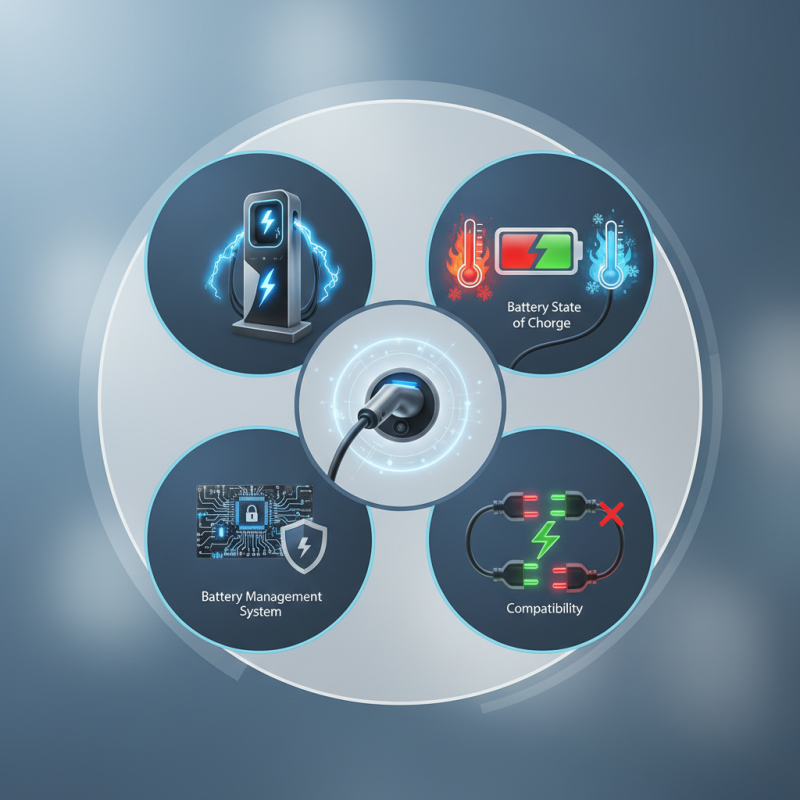
Various elements influence charging speed. For instance, the type of charger in use makes a significant difference. Fast chargers can deliver higher power levels, reducing downtime. The battery's state of charge also plays a role. A nearly empty battery charges faster than one that’s almost full. Temperature is another factor; extreme heat or cold can limit charging efficiency.
Connections and compatibility matter too. Not all vehicles and chargers are the same. Understanding this can help avoid frustration. Additionally, the vehicle's battery management system ensures safe charging but may limit speed for protection. These factors are just a glimpse into the complexities of EV charging. Charging process optimization is essential for enhancing the EV driving experience.
Types of EV Chargers and Their Impact on Charging Speed
When considering EV chargers, the type of charger plays a crucial role in determining charging speed. Level 1 chargers, often seen in home garages, are the slowest. They typically use a standard 120V outlet and can take more than 12 hours for a full charge. These chargers may work for overnight charging but are not practical for quick top-ups during the day.
On the other hand, Level 2 chargers significantly reduce charging time. They utilize a 240V outlet commonly found in commercial settings. A Level 2 charger can restore an EV’s battery in just 4 to 8 hours, making it a popular choice for businesses and public charging locations. However, not everyone has access to these outlets, limiting their use in residential areas.
Fast chargers, often categorized as Level 3, offer the quickest charging speeds. They can provide up to 80% battery in as little as 30 minutes. While fast chargers are becoming more common, the infrastructure is still developing in many regions. Additionally, costs associated with installation and electricity can be a barrier. Even with advancements, finding an optimal charger can be a challenge for users, leading to charging anxiety. This highlights the need for further innovation and accessibility in EV charging solutions.
The Role of Battery Capacity in Charging Efficiency
Battery capacity plays a crucial role in determining the efficiency of electric vehicle (EV) charging. Larger battery capacities generally allow for longer driving ranges but also require more time for a full charge. According to the International Energy Agency (IEA), most electric vehicles on the market today have battery capacities ranging from 50 kWh to 100 kWh. The time required for charging these batteries can vary greatly based on several factors.
For example, a battery with a capacity of 60 kWh can typically be charged from 20% to 80% in about 30 minutes using a fast charger. However, charging from 80% to 100% can take significantly longer. This is due to the diminishing returns of the charging curve; as the battery nears full capacity, the charging speed often slows down to protect the battery's lifespan. Research indicates that charging speed can drop to as low as 10% of the maximum rate when approaching full capacity, which is a reality many EV users face.
Another important aspect is the charging infrastructure. Not all charging stations can deliver the same power output. A Level 3 fast charger might provide up to 350 kW, while Level 2 chargers typically offer only 7.2 kW. Studies show that the availability and quality of charging stations significantly influence the overall charging experience. Limited access to high-output chargers can result in extended waiting times for drivers, which remains an obstacle for EV adoption. This inconsistency in charging availability needs closer examination within the growing EV landscape.
Environmental Factors Influencing Charging Rates
Environmental factors play a pivotal role in determining EV charging speed. Temperature, for instance, can significantly impact battery performance. Studies indicate that charging at extremely low temperatures can slow the charging process by up to 30%, while high temperatures can lead to thermal management issues. This can ultimately influence the overall efficiency of the charging session.
Another critical factor is the humidity level in the environment. High humidity can condense on electrical components, increasing the risk of corrosion and malfunction. This might not only reduce the system’s effectiveness but could also pose safety concerns. According to recent industry reports, areas with consistently high humidity may experience charging inefficiencies that could vary by 5-10%.
Furthermore, altitude can't be overlooked. Higher elevations lead to thinner air, which affects cooling systems and can impair vehicle performance. In regions with higher altitudes, charging stations might need additional cooling measures. Surprisingly, not all charging stations account for these environmental variations. As the EV market expands, addressing these factors will be crucial for optimizing charging speed and ensuring user satisfaction.
5 Key Factors That Affect EV Charging Speed
This chart illustrates the impact of various environmental factors on the charging speed of electric vehicles (EVs). The data represents average charging speeds (in kW) under different conditions.
Vehicle Technology and Its Effect on Charging Speed
Vehicle technology plays a crucial role in determining electric vehicle (EV) charging speed. Various factors influence how quickly an EV can charge at a station. One main aspect is the battery type and chemistry. Lithium-ion batteries dominate the market due to their high energy density and efficiency. According to the International Energy Agency, advancements in battery technology can potentially boost charging speeds by 70% within the next decade.
Charging infrastructure is another critical element. The availability of fast chargers impacts the overall charging time. For instance, DC fast chargers can deliver up to 350 kW, allowing compatible vehicles to charge up to 80% in just 30 minutes. However, many EVs still use Level 2 chargers with a maximum of 7.2 kW, resulting in longer charging times. These disparities emphasize the importance of matching vehicle compatibility with available charging options.
Tips: Always check your EV’s compatibility with charging stations. Look for fast charging networks on your route. Regularly updating your vehicle’s software can also improve charging efficiency. Battery management systems play a vital role, as well. An efficient BMS can help optimize charging rates, prolong battery life, and prevent overheating. Charging times might vary based on external temperatures, so consider climate factors when planning your charging stops.
Charging Infrastructure: Availability and Compatibility Considerations
Charging infrastructure plays a crucial role in the speed of electric vehicle (EV) charging. The availability of charging stations greatly impacts how quickly users can recharge their vehicles. In urban areas, the density of charging points is usually higher, leading to shorter wait times. However, rural areas may lack sufficient charging infrastructure, causing inconvenience for EV owners.
Compatibility is another key consideration. Different EVs use various charging standards, which can affect the charging speed. Some chargers provide quicker charging options, while others may only support slower rates. This disparity can leave drivers frustrated if they cannot find compatible chargers. The variety of plug types may also confuse users, leading to unintended delays.
Moreover, the condition of charging stations can affect performance. Well-maintained chargers work more efficiently than those that are outdated or malfunctioning. Regular inspections and updates to the infrastructure are necessary to ensure reliability. It is essential to recognize these challenges to encourage further development in the EV charging ecosystem. Ignoring the need for improved compatibility and availability may hinder the growth of electric vehicle adoption.
5 Key Factors That Affect EV Charging Speed
| Factor |
Description |
Impact on Charging Speed |
Typical Values |
| Charger Power Level |
The maximum output power of the charger |
Higher power levels lead to faster charging |
3 kW, 7 kW, 22 kW, 50 kW, 150 kW |
| Battery Capacity |
Total capacity of the EV's battery |
Larger capacity may require more time to charge |
24 kWh, 40 kWh, 75 kWh, 100 kWh |
| State of Charge (SOC) |
Current charge level of the battery |
Lower SOC generally allows for faster charging rates |
20%, 50%, 80%, 100% |
| Temperature |
Ambient temperature during charging |
Extremes can reduce charging efficiency |
-20°C to 40°C |
| Charger Compatibility |
Compatibility between EV and charger type |
Mismatch can limit charging speed |
CHAdeMO, CCS, Type 2, etc. |
FAQS
: Charging at extremely low temperatures can slow the process by up to 30%. High temperatures can cause thermal issues.
High humidity can lead to corrosion in electrical components. This can reduce effectiveness and create safety concerns.
Higher elevations result in thinner air, influencing cooling systems and vehicle performance. Some stations may need better cooling.
The availability of charging stations directly affects how quickly users can recharge their vehicles. Urban areas often have more stations.
Different charging standards can lead to slower rates if users can't find compatible chargers. Users may also find various plug types confusing.
Well-maintained chargers generally work more efficiently than outdated ones. Regular inspections are necessary to ensure reliability.
Ignoring infrastructure updates may hinder EV adoption. Outdated stations can lead to inefficiencies and user frustration.
Yes, variations in temperature, humidity, and altitude can impact charging rates, leading to inefficiencies in different regions.
Conclusion
When considering what factors affect EV charging speed, several key elements come into play. Firstly, the types of EV chargers significantly impact how quickly a vehicle can charge, with differences in power output ranging from Level 1 to Level 3 chargers. Additionally, the battery capacity of the vehicle plays a critical role; larger batteries typically require more time to charge, although advancements in technology can enhance efficiency.
Environmental conditions, such as temperature, can also influence charging rates, with extreme heat or cold potentially slowing down the process. Furthermore, the vehicle’s technology, including its onboard charging system, determines how well it can handle incoming power. Lastly, the availability and compatibility of charging infrastructure are crucial, as access to more advanced and compatible charging stations can facilitate quicker charging times. Understanding these factors can help EV users optimize their charging experience.

 Zap Charger