Preparing a home for an electric vehicle is more than installing a wall charger. It involves electrical capacity, safe cable routing, parking access, weather protection, and future energy needs. This guide explains how to prepare your home for electric vehicle charging with practical, safety-focused advice.
Begin with your home’s electrical panel. Older panels may lack enough capacity for a dedicated EV circuit. A qualified electrician can assess the service rating, available breaker space, grounding, and expected charging load. Do not assume a spare breaker is sufficient. It may not be.
The charging location also matters. A driveway installation may require outdoor-rated equipment, protected conduit, and careful positioning near the vehicle’s charging port. In a garage, the cable should remain clear of doors, tires, moisture, and walking paths. Small details prevent daily frustration. Measure the cable distance before buying the charger. Chargers with smart scheduling can reduce peak electricity use, especially when combined with solar panels or time-of-use pricing.
Local permit and inspection requirements should be confirmed before work begins. Requirements differ between regions and may change over time, so reliable guidance should come from licensed electricians, utilities, or official building authorities. Avoid connecting equipment to live circuits yourself. One rushed decision can create heat, nuisance tripping, or serious fire risk.
A sensible plan also considers tomorrow’s vehicle, not only today’s model. Your first installation may be adequate, yet a larger battery or second EV could expose its limits. That possibility deserves attention. The safest preparation balances charging speed, installation cost, household demand, and long-term flexibility.
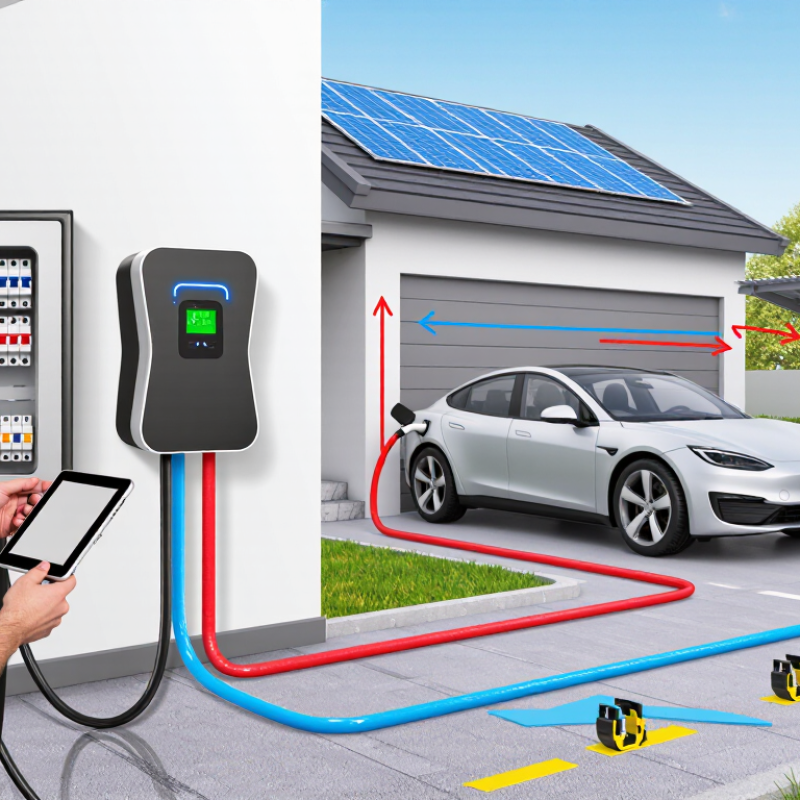
Before choosing an EV charger, inspect your home’s electrical capacity. The U.S. Department of Energy’s Alternative Fuels Data Center reports that Level 2 equipment typically operates at 208 or 240 volts. It may draw between 12 and 80 amps, depending on the model and setting. That range matters. A 100-amp service may struggle when cooking, heating, cooling, and charging happen together.
Ask a licensed electrician to calculate the home’s continuous electrical load. The panel rating alone does not tell the full story. They should check the main service, spare breaker space, wiring condition, grounding, and the distance to the parking area. A thermal scan can also reveal warm connections after sustained use. Small details count. An aging panel can look perfectly tidy.
The International Energy Agency recorded nearly 14 million electric car sales worldwide in 2023, increasing pressure on household systems. A managed charging schedule may reduce peak demand, but it cannot repair undersized wiring. Do not assume a lower charging setting solves everything. It may help, but the calculation still needs professional review. In some homes, upgrading the service is sensible; in others, a dedicated circuit and load management are enough. The answer is rarely based on appearance.
Choose the charger around your daily driving, electrical capacity, and available space. A faster unit is not always the best choice. Ask a qualified electrician to assess your panel, wiring, grounding, and expected charging load. Request a written recommendation. It makes later decisions clearer. The installation should follow local electrical requirements and include suitable protection devices.
Tip: Select a location close to your parking position, but do not sacrifice safety for convenience. Keep the cable away from walkways, gates, sharp corners, and standing water. A garage wall can offer shelter, while an outdoor location needs equipment rated for weather exposure. Leave enough room to open the vehicle’s charging port comfortably. Small details matter.
Tip: Check the cable length before installation. A cable that barely reaches the vehicle becomes frustrating during winter or when another car is parked nearby. Avoid placing the charger where doors, storage shelves, or lawn equipment may hit it. Good lighting also helps at night. This is easy to overlook.
A professional should inspect the mounting surface and confirm that the electrical route is practical. Long cable runs may increase labor and require additional protection. I would not assume an existing socket is suitable, even if it has worked for other appliances. That assumption can be expensive. Take photos of the parking area and electrical panel before requesting estimates. Then compare the proposed location, load calculation, maintenance access, and final testing details.
Preparing for home EV charging starts behind the wall, not at the driveway. The International Energy Agency reported more than 14 million electric cars sold worldwide in 2023, increasing pressure on residential electrical systems. Ask a licensed electrician to inspect the service capacity, panel condition, grounding, and available breaker spaces. A dedicated circuit is essential. Sharing a circuit with dryers or kitchen appliances can create nuisance trips and overheating risks.
Plan the cable route before choosing the charger location. Keep wiring protected from moisture, vehicle impact, sharp edges, and excessive heat. The National Electrical Code, including Article 625, provides requirements for electric vehicle supply equipment in the United States, while other regions follow different standards. Install the correct overcurrent protection, conductor size, and residual-current or ground-fault protection for the equipment and local rules. Do not guess.
Safety equipment matters. A visible disconnect may be required or strongly advised, especially for outdoor installations. Surge protection can also protect sensitive electronics during electrical disturbances, although it cannot replace proper grounding. The U.S. Department of Energy notes that Level 2 charging commonly uses a 240-volt circuit, so the load deserves careful calculation. A neat installation can still hide a poor design. Leave room in the panel for future demand, and photograph the completed wiring for maintenance records. Small details matter.
| Preparation Area | Recommended Practice | Typical Requirement or Range | Safety and Compliance Notes |
|---|---|---|---|
| Assess Daily Charging Needs | Estimate regular driving distance, available parking time, and the vehicle’s accepted charging rate before choosing equipment. | A lower-power installation may be sufficient for overnight charging; higher-power charging requires greater electrical capacity. | Do not select a circuit size solely from the vehicle’s maximum charging rate. The entire installation must be assessed. |
| Choose the Charging Location | Place the charging point close to the usual parking position while keeping the cable route short, protected, and free from vehicle or pedestrian traffic. | The final cable length depends on the garage layout, parking distance, and electrical panel location. | Avoid extension cords and cable routes that cross driveways, walkways, doorways, or areas where water can collect. |
| Check the Main Electrical Panel | Have a qualified electrician inspect the panel rating, available breaker spaces, service capacity, grounding, and condition of existing wiring. | Many homes have service ratings such as 100 A, 150 A, or 200 A, but available capacity must be calculated rather than assumed. | An apparently empty breaker position does not necessarily mean the home has enough capacity for continuous EV charging. |
| Install a Dedicated Circuit | Use a dedicated branch circuit for the EV charging equipment so no other loads share the circuit. | Common residential charging circuits are sized around 20 A to 60 A, depending on the equipment and local electrical rules. | Circuit sizing must match the charger instructions, conductor size, breaker rating, installation method, and applicable code. |
| Apply Continuous-Load Rules | Treat EV charging as a continuous load when required by the applicable electrical code. | Under the widely used 125% sizing principle, a 32 A continuous load generally requires a circuit rated for at least 40 A. | Local regulations may differ. A licensed electrician should perform the final load calculation. |
| Select Correct Conductors | Use conductors with the correct ampacity, insulation rating, temperature rating, and installation method for the circuit. | Conductor size varies with current, run length, ambient temperature, conduit fill, and local code; a single wire size cannot be assumed. | Long cable runs may require voltage-drop evaluation and larger conductors to maintain performance. |
| Protect Against Ground-Fault Current | Provide the ground-fault protection required for EV charging equipment by the local code and equipment instructions. | Protection may be supplied by a ground-fault circuit interrupter, residual-current device, or integrated equivalent. | The protection type must be compatible with the charging equipment and the electrical system. |
| Use Weather-Appropriate Equipment | For outdoor or partially exposed installations, use equipment and enclosures rated for the expected moisture, temperature, and impact conditions. | Outdoor installations commonly require weather-resistant enclosures and fittings; the exact rating depends on location and local rules. | Keep connectors off the ground, close covers when not in use, and prevent water from entering plugs or receptacles. |
| Install Proper Disconnecting Means | Provide the disconnecting equipment required by the applicable code and make sure it is accessible to authorized users. | The location and type of disconnect depend on the installation layout, equipment design, and local regulations. | Do not place electrical controls where they can be struck by vehicles or obstruct emergency access. |
| Plan for Load Management | Consider a load-management system if the service cannot support simultaneous operation of the charger and major household loads. | Possible approaches include scheduled charging, adjustable current settings, or automatic load balancing. | Load management must be installed and configured according to the equipment instructions and electrical code. |
| Protect the Cable and Receptacle | Route wiring through suitable conduit or other approved protection, and mount the receptacle or charging unit securely. | Protection requirements depend on whether the wiring is indoors, outdoors, underground, surface-mounted, or concealed. | Do not use damaged cables, loose receptacles, makeshift splices, or adapters that are not approved for the application. |
| Arrange Inspection and Permits | Check permit requirements before work begins and arrange inspection when required by the local authority. | Permit and inspection requirements vary by jurisdiction, property type, and installation scope. | Use a qualified electrician familiar with EV charging installations and retain the final inspection documentation. |
| Perform Final Safety Checks | Test the circuit, protective devices, grounding, connections, charging operation, and emergency shutoff procedures before regular use. | The electrician should verify correct voltage, secure terminations, protective-device operation, and absence of abnormal heating. | Stop using the system if there is burning odor, discoloration, repeated tripping, overheating, sparking, or visible damage. |
Note: Electrical requirements vary by country, state, province, and local authority. The final design, circuit sizing, protection, permits, and inspection should be confirmed by a qualified electrician and the applicable electrical code.
Before buying an electric vehicle charger, arrange a licensed electrician’s site assessment. The U.S. Department of Energy’s Alternative Fuels Data Center identifies Level 2 charging as a 208–240-volt load, often requiring a dedicated circuit. Your electrician should inspect the service panel, calculate the home’s total electrical demand, and check cable routes, grounding, weather exposure, and charger clearance. Do not guess.
Contact the local building or electrical authority before installation. Permit requirements vary by location, and approval may involve plan review, an electrical inspection, or utility notification. NFPA 70, Article 625, provides widely used requirements for electric vehicle charging equipment, but local rules control the final installation. The Electrical Safety Foundation International estimates that electrical problems cause about 51,000 home fires annually in the United States, so shortcuts are not minor concerns. A crowded panel may need an upgrade, while a detached garage may require a properly protected underground feeder. I have seen homeowners focus on charging speed and overlook trench depth or inspection access. That mistake can delay approval and create expensive rework. Keep the permit, load calculation, equipment instructions, and inspection record together. Ask the installer to explain each decision in plain language. A neat cable run matters, too.
Test the setup before relying on it for daily charging. Check the outlet, cable, breaker, and charging unit for heat, damage, or unusual noise. A slightly warm plug may be normal, but a hot one is a warning. Use a qualified electrician to confirm circuit capacity and grounding. Local electrical requirements can vary, so do not guess.
Monitor charging during the first few weeks. Look for repeated interruptions, slow charging, flickering lights, or breaker trips. Record the time, weather, and charging level when problems occur. This simple log can help an electrician find patterns faster. A phone alert is useful, but it should not replace physical checks.
Maintain the equipment on a regular schedule. Keep connectors dry and free from dust. Store the cable loosely, away from driveways and sharp edges. Inspect wall mounts and outdoor covers after storms. Replace damaged parts instead of improvising repairs. One easy mistake is ignoring gradual wear because the charger still works. That judgment can change after one rainy night. Test the system again after electrical work, renovations, or long periods of disuse. A cautious pause is better than a rushed charge.
Ask a licensed electrician to calculate the continuous electrical load. A panel’s rating alone is not enough. Cooking, heating, cooling, and charging may overlap. A 100-amp service could struggle during that busy period.
They should check the main service, spare breaker space, wiring condition, grounding, and cable distance. They should also inspect the parking area and outdoor exposure. A thermal scan may reveal warm connections. Small details matter.
No. Some homes need a service upgrade, while others need a dedicated circuit and load management. The answer depends on the calculated demand. I might wrongly assume a lower charging setting fixes everything. It does not repair undersized wiring.
Level 2 charging commonly uses 208 or 240 volts. It often needs a dedicated circuit. The circuit must match the charger’s current setting and the home’s capacity. Do not guess.
Permit requirements vary by location. Approval may include plan review, electrical inspection, or utility notification. Ask the local authority before installation. Keep the permit and inspection record together.
A crowded panel may need changes. A detached garage may require a protected underground feeder. Cable routes, trench depth, grounding, and inspection access also matter. A neat cable run helps.
Watch for repeated interruptions, slow charging, flickering lights, or breaker trips. Check the plug and cable for heat or damage. A hot plug is a warning. Stop and contact a qualified electrician.
Record the charging time, weather, and charging level. Note every interruption or unusual sound. Phone alerts help, but physical checks still matter. Patterns can guide the electrician.
Keep connectors dry and free from dust. Store the cable loosely, away from driveways and sharp edges. Inspect outdoor covers after storms. Replace damaged parts instead of making improvised repairs.
Test it after electrical work, renovations, or long periods without use. Check wall mounts, covers, cables, and connections. A cautious pause is better than a rushed charge. That judgment may need reconsideration after one rainy night.
Preparing your home for electric vehicle charging begins with evaluating its electrical capacity. Check whether the existing service panel can support the charger alongside household appliances, and identify a practical installation location with suitable access to the parking area. Select a charger that matches your vehicle and daily driving needs, while considering cable reach, weather exposure, ventilation, and convenient operation.
The next steps in how to prepare your home for electric vehicle charging include planning dedicated wiring, circuits, grounding, and appropriate safety equipment. A qualified electrician should complete the installation and confirm whether local inspections or permits are required. After installation, test the charger, connection, and protective devices before regular use. Ongoing monitoring can help identify unusual heat, fault messages, or reduced performance, while routine checks of cables, plugs, and surrounding areas support safe and reliable charging over time.

Zap Charger