As electric vehicles (EVs) gain traction globally, understanding how does EV charging work for beginners becomes crucial. According to a report by the International Energy Agency, the number of publicly available EV charging points surged to over 2.3 million in 2025, reflecting a 45% increase from the previous year. This rapid growth signifies a shift towards sustainable transportation and highlights the need for clear guidance for new EV owners.
Expert David Green, a leading figure in the EV sector, emphasizes the importance of comprehending EV charging basics. He states, "Navigating EV charging may seem complex, but it’s essential for new users to grasp the fundamentals." An understanding of different charging levels—Level 1, Level 2, and DC fast charging—will empower beginners to choose suitable options. Each level offers unique charging speeds and installation requirements, which can be overwhelming initially.
Additionally, while the technology is advancing, challenges persist. Access to charging stations can still be inconsistent, particularly in rural areas. New users may struggle to find reliable locations for charging, which can hinder their experience with EVs. Addressing these issues offers room for improvement in the evolving landscape, making it imperative to seek knowledge about how does EV charging work for beginners.
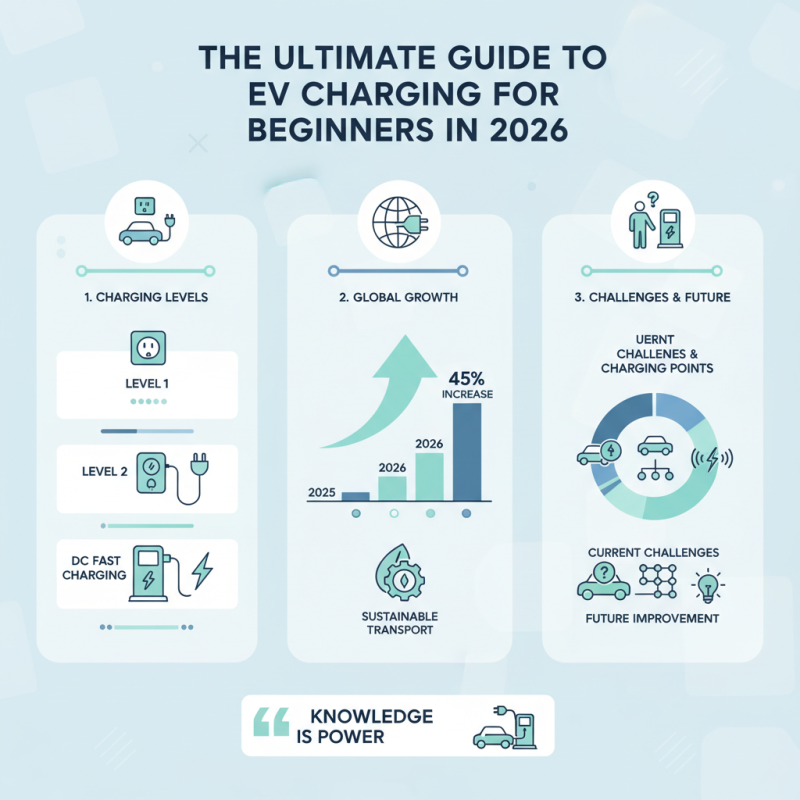
Understanding the Basics of Electric Vehicle (EV) Charging
Understanding electric vehicle (EV) charging is essential for all new users. Charging an EV is different from refueling a gasoline car.
There are various types of chargers available, each designed for specific use cases.
Level 1 chargers are typically found in homes. They use a standard outlet and are the slowest option.
Level 2 chargers, more common in public spaces, offer faster charging times, allowing drivers to recharge while they shop or work.
DC fast charging stations are the quickest, providing significant range in a short duration. They are vital for long trips. The location of charging stations can influence your travel plans. Tools that map these stations are helpful.
However, not every station is accessible at all times. Maintenance issues can sometimes leave a driver stranded.
It's also important to know that battery health affects charging efficiency. Frequent use of fast chargers may degrade battery life over time. Monitoring charging habits can help in maintaining battery performance.
As you learn about EV charging, remember that experience is your best teacher. It’s a journey, not just a destination.
Types of EV Charging Stations: Level 1, Level 2, and DC Fast Charging
Understanding the types of EV charging stations is essential for new electric vehicle owners. There are three primary levels:
Level 1,
Level 2, and
DC Fast Charging. Each type serves different needs and use cases.
Level 1 charging uses a standard household outlet. It’s the slowest option, providing about 4-5 miles of range per hour. This is ideal for overnight charging at home when your car isn’t in use. Many beginners appreciate its simplicity, but it may not be adequate for those with longer daily commutes.
Level 2 charging is significantly faster. These stations can charge an EV in 4-6 hours, offering up to 25 miles of range per hour. You can find Level 2 chargers in public spaces like parking lots and workplaces. This option is convenient for most drivers but may require installation of special equipment at home, which can be costly.
DC Fast Charging is meant for quick stops. It can deliver an 80% charge in about 30 minutes. However, it's less common and usually found on highways. Drivers should be aware that frequent use could lead to battery wear over time. Each charging type has pros and cons, and understanding them helps in planning your EV journeys.
How to Choose the Right Charging Station for Your EV
Choosing the right charging station for your electric vehicle involves several key considerations. Start by assessing your driving habits.
Do you primarily take short trips or long journeys?
For daily commuters, a Level 2 charger at home is ideal. It provides a good balance of charging speed and cost efficiency.
For those planning longer trips, locating fast-charging stations along your route becomes essential.
Consider the compatibility of the charging station with your EV model. Not all stations work with every vehicle. Some might only support specific connectors.
Research local options and check if they fit your needs.
It’s also crucial to think about installation. Hiring a qualified installer ensures your station is set up correctly and safely.
Reflect on the location of public charging options. If you often travel to specific areas, ensuring that reliable stations are available can ease your concerns.
However, you might find some stations often busy or out of service.
This uncertainty can lead to unplanned charging delays. Balancing between convenience and availability is key.
As the EV landscape evolves, staying informed will help in making better choices for your charging needs.
The Future of EV Charging Infrastructure in 2026
The EV charging infrastructure in 2026 is set to transform urban landscapes. Cities are increasingly integrating charging stations into daily life. You might find them at supermarkets, parking lots, and even on residential streets. The rise of fast-charging technologies will enable drivers to charge their vehicles in under 30 minutes. This convenience could encourage more people to switch to electric vehicles.
Urban planners are prioritizing accessibility, ensuring these charging stations are available for all. However, challenges arise in rural areas where charging options remain limited. Enhancing the power grid to support increased demand is essential. Countries will need to invest in renewable energy sources to power these charging stations sustainably. Addressing these gaps is crucial for broader adoption of electric vehicles.
Public awareness and education on EV benefits must improve. Though the technology is advancing, daily habits take time to change. Infrastructure development is a significant step, but consumer acceptance is just as vital. Many individuals still have concerns about charging availability and range anxiety. Overcoming these hurdles is critical for achieving a comprehensive, efficient, and reliable EV charging network.
The Future of EV Charging Infrastructure in 2026
This chart illustrates the projected growth of EV charging stations across different regions by 2026. It highlights the increasing demand for charging infrastructure as electric vehicle adoption rises. The data reflects the estimated number of charging stations in thousands.
Tips for Safe and Efficient EV Charging Practices
When it comes to electric vehicle (EV) charging, safety and efficiency are paramount. Understanding the nuances of charging can greatly enhance your experience. Here are some tips to ensure you practice safe and efficient EV charging.
Always check your charger before plugging in. Look for visible damage. Cracked cords or frayed ends can pose hazards. Practicing vigilance helps prevent accidents. It’s crucial to use a charger compatible with your vehicle to avoid costly damage.
Charging at home can be more convenient, but monitor the charging process. Overcharging can lead to battery wear. If you notice the charger getting unusually hot, disconnect it immediately. It’s an essential reminder to remain attentive during charging sessions.
Plan your charging trips wisely. Not all charging stations are created equal. Some may take longer than others. Use apps to locate reliable stations. Ensure they have the necessary power to meet your charging needs. This could save time and reduce range anxiety.
The Ultimate Guide to EV Charging for Beginners in 2026 - Tips for Safe and Efficient EV Charging Practices
| Charging Type |
Charging Time |
Estimated Cost |
Best Use Case |
Safety Tips |
| Level 1 Charging |
8-12 hours |
$0.10-$0.20 per kWh |
Home charging overnight |
Ensure outlets are suitable for EV charging |
| Level 2 Charging |
4-6 hours |
$0.15-$0.30 per kWh |
Public charging stations, workplace |
Use designated charging stations only |
| DC Fast Charging |
30 minutes to 1 hour |
$0.20-$0.40 per kWh |
Long trips and quick top-ups |
Monitor battery levels to avoid overcharging |
| Wireless Charging |
N/A |
$0.25-$0.35 per kWh |
Convenience at home or in garages |
Ensure alignment with the charging pad |
Conclusion
In "The Ultimate Guide to EV Charging for Beginners in 2026," readers are introduced to the fundamental concepts of electric vehicle (EV) charging, making it accessible for novices. The guide breaks down how does EV charging work for beginners by explaining the different types of charging stations—Level 1, Level 2, and DC Fast Charging—highlighting their use cases and charging speeds. Additionally, it provides insights on selecting the appropriate charging station based on individual EV needs and driving habits.
Looking forward to 2026, the guide discusses anticipated advancements in EV charging infrastructure, emphasizing the importance of accessibility and efficiency in supporting the growing number of electric vehicles. Furthermore, practical tips for safe and efficient charging practices are offered, ensuring that new EV owners can maximize their charging experience while minimizing risks. Overall, this comprehensive resource serves as an essential roadmap for those venturing into the world of electric vehicles.

 Zap Charger