Engineered for extreme maritime climates, off-grid compatibility, and micro-grid balancing across regional commercial fleets.
As an archipelago nation heavily reliant on imported fossil fuels, the Republic of Seychelles has charted an aggressive roadmap toward energy independence and carbon neutrality. Through initiatives led by the Public Utilities Corporation (PUC) and national policies promoting electric vehicle adoption across Mahe, Praslin, and La Digue, electrification is no longer an option—it is a core strategy. However, island dynamics introduce unique grid challenges. Traditional internal combustion engine (ICE) vehicles are rapidly being replaced by electric passenger fleets, resort shuttles, and light utility trucks. This rapid expansion demands highly intelligent EV Charging Control Units (EVCC) and Vehicle Control Units (VCU) that can handle localized power fluctuations and integrate seamlessly with solar PV systems.
The primary barrier to scaling electric mobility in the Seychelles is not public interest, but grid load capacity. Unlike mainland grids with massive interconnectivity, island microgrids suffer from low system inertia. When multiple DC fast chargers activate simultaneously, they run the risk of causing grid destabilization. Intelligent EV Charging Control Units act as the gatekeeper of this interface. By utilizing dynamic load management algorithms and CAN-bus communications, our EVCCs enable smart charging sessions that adjust consumption rates according to real-time grid conditions. This mitigates peak load issues and facilitates smooth coordination with decentralized energy assets, such as battery energy storage systems (BESS) and commercial solar canopies prevalent in high-end Seychellois eco-resorts.
Dynamic power allocation adjusting charging outputs based on real-time solar yield and battery levels across island grids.
Conformal coating and sealed housings (IP67) protect critical electronic circuits from high humidity, salinity, and high ambient temperatures.
Real-time vehicle parameter monitoring over CAN 2.0B prevents electrical thermal runaway and extends battery pack lifecycle.
EV infrastructure requirements vary wildly depending on the localized operational zone within the archipelago. Our range of control units has been engineered to handle these specific deployment patterns:
Seychelles has a tropical climate characterized by constant high humidity (often exceeding 85%) and airborne salt spray. Ingress protection is critical. Zap Charger's EV Charging Control Units and VCUs utilize an advanced sealing process, heavy-duty automotive-grade connectors, and dual-layer conformal coatings. They undergo rigorous environmental testing, including 1,000-hour salt-fog chambers, to ensure that neither moisture nor saline deposition causes internal shorts, trace corrosion, or premature component breakdown. This design security directly correlates with a lower Total Cost of Ownership (TCO) for local operators.
Hangzhou Zap Charger Co., Ltd. is a professional EV charging solutions manufacturer specializing in high-performance connectors, cables, and smart charging systems for the global electric mobility market. Based in Hangzhou, the company benefits from a strong technology ecosystem and advanced manufacturing capabilities, enabling efficient production and continuous innovation.
By sourcing control units from our advanced manufacturing plant in Hangzhou, global procurement managers and Seychellois installation companies bridge the gap between cutting-edge automotive architecture and economical volume production. Our facilities feature automated SMT lines, X-ray inspection systems, and end-of-line functional testers to verify every control signal, voltage regulator, and CAN packet before shipment.
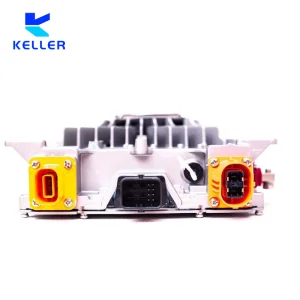
We recognize that localized power grids in the Indian Ocean area face unique voltage drops and varying safety mandates. Through our professional OEM/ODM services, clients can customize specifications, firmware protocols (such as OCPP 1.6J/2.0.1 and ISO 15118 for plug-and-charge capability), and structural dimensions. This flexibility guarantees that whether your project requires high-voltage OBCs (312V systems) or auxiliary converters for light electric utility vehicles, you receive ready-to-integrate control modules that meet CE, IEC, and local Seychellois standards.
Providing scalable, robust controllers designed for commercial fleet conversions and high-uptime public charging infrastructure.
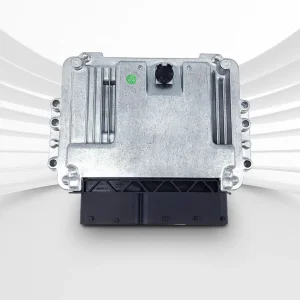
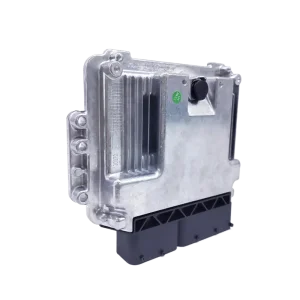
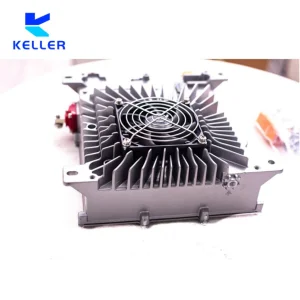
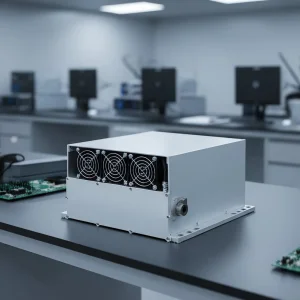
Our control units function as the dual central processing center for electric drivetrains (Vehicle Control Unit) and energy distribution (EV Charging Control Unit). They coordinate key systems:
The VCU parses input from the throttle, brake pedal, battery management system (BMS), and motor inverter. By managing torque distribution in real-time, the VCU prevents drive motor stress, controls energy recuperation (regenerative braking), and guarantees active safety systems operate without latency. Built with automotive-grade MCU cores, our VCUs support dual CAN channels and perform self-diagnostic checks thousands of times per second.
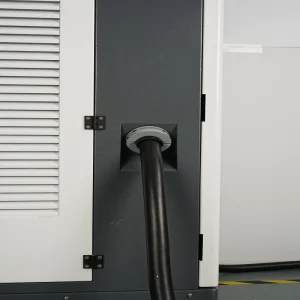
For charging stations, the EVCC is the core component managing safety parameters during CCS2 or GB/T charging sessions. It handles digital signal negotiations, verifies insulation monitoring status, controls electromagnetic locks, and communicates directly with the EV to deliver precise current demands. If any parameter falls outside normal thresholds, the unit drops the contactor line instantly to prevent hardware degradation or high-voltage safety issues.
Clear, engineering-focused answers regarding importing, deploying, and customizing our control technology in the Seychelles.
Get in touch with our engineering support and sales team in Hangzhou. Let us help you select the exact control parameters, voltage thresholds, and ingress ratings required for your specific application.
Send Inquiry Now Zap Charger