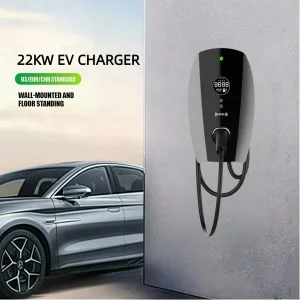
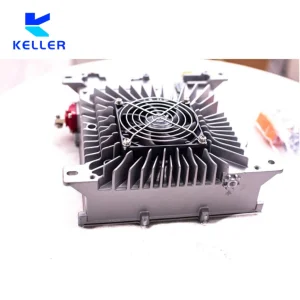
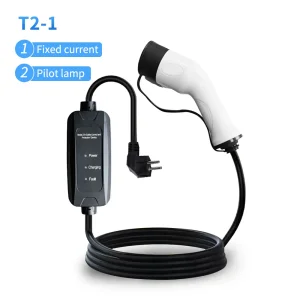
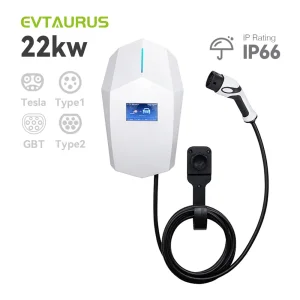
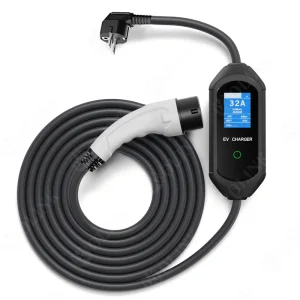
High-performance charging assets optimized for commercial ecosystems, private integration, and advanced OCPP cloud compliance billing nodes.
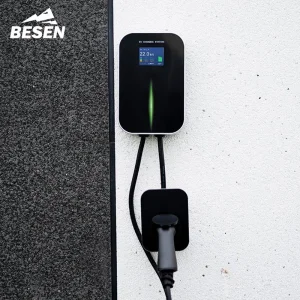
How Open Charge Point Protocols (OCPP) and precision transaction processing are redefining e-mobility monetization strategies.
Modern charging operations demand cryptographically secure payment pipelines. Advanced factories engineer hardware terminal nodes featuring embedded Hardware Secure Modules (HSM) and TLS 1.3 encryption protocols, preventing transaction tampering and offering seamless local regulatory fiscalization compliance.
Interoperability forms the core foundation of scalable grid networks. True export-grade hardware implements full native JSON WebSocket execution stacks, permitting real-time synchronization with major third-party Central Management Systems (CMS) for instant dynamic pricing, remote configuration, and continuous diagnostic validation.
Prevent distribution grid overloading through sub-second local load balancing algorithms. Software billing architectures seamlessly aggregate meter readings, adjusting variable duty-cycles across hundreds of charging ports automatically according to spot energy pricing matrices and structural limitations.
For high-capacity Charge Point Operators (CPOs), government infrastructure developers, and multi-national fleet logistics managers, sourcing components from reliable EV charging billing systems factories & exporters is not merely a hardware procurement transaction; it represents a foundational strategic investment designed to maximize lifetime return on investment (ROI) while minimizing total cost of ownership (TCO). To navigate this shifting ecosystem effectively, global procurement directors must evaluate manufacturers against core operational metrics:
Many economy exporters advertise "OCPP Ready" devices that fail under heavy municipal network load conditions due to unoptimized flash memory stacks and poor network connection retry configurations. True industrial-grade hardware contains onboard non-volatile memory caches designed to store hundreds of transaction logs offline locally during backhaul cellular link failures, systematically executing bulk synchronization commands immediately upon link restoration to ensure zero transaction data leakage.
The operational capabilities of Hangzhou Zap Charger Co., Ltd. represent an exceptional modern standard within the professional EVSE manufacturing domain. As an innovative EV charging solutions manufacturer specializing in high-performance connectors, cables, and smart charging systems for the global electric mobility market, the enterprise capitalizes on its position within Hangzhou’s premier technology hub to integrate cutting-edge industrial IoT architectures directly into its production lines.
Operating a Factory 4.0 production matrix allows the organization to optimize end-to-end efficiency while maintaining highly rigorous quality control protocols across its comprehensive product portfolio. This includes EV charging connectors, high-capacity AC/DC cables, ultra-portable field chargers, and highly specialized intelligent billing hardware infrastructure tailored for residential, commercial, and intensive public applications. By integrating Automated Optical Inspection (AOI), robotic component mounting assemblies, and automated environmental stress-screening systems, every terminal device is built to tolerate severe real-world deployment challenges.
Driven by an agile, multi-disciplinary R&D division, the enterprise consistently incorporates advanced power electronics optimizations alongside highly robust firmware stacks designed to lower thermodynamic footprint and extend service life. Furthermore, recognizing the highly diverse operational constraints of international utility frameworks, the organization provides adaptable OEM and ODM services. This structure allows overseas partners to adjust precise mechanical configurations, tailor structural branding design accents, and flash custom firmware parameters to satisfy localized grid connection rules and regional market certification standards cleanly.
How variable hardware configurations optimize user monetization across distinct global commercial touchpoints.
In municipal parking zones and office complexes, the core objective centers on managing peak morning grid congestion. Implementing dual-port AC systems integrated with local RFID/APP user authentication billing links allows management companies to apply dynamic idle-fee models, driving optimal station rotation speeds while maximizing real-time utility capacity without upgrading core structural transformers.
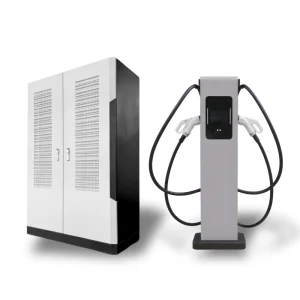
Commercial trucking corridors and logistics terminals demand continuous, high-kilowatt power distribution. Here, modular split-architecture DC fast charging networks paired with automated fleet token validation structures ensure heavy-duty distribution trucks are charged on schedule. Centralized management consoles balance site power limits against route schedules to minimize grid demand charges.
Deploying infrastructure in regions lacking robust grid connections requires close hardware coordination between photovoltaic generation matrices, battery energy storage installations (BESS), and localized charging terminals. Intelligent scheduling software routes excess solar generation directly into connected vehicle batteries, transforming localized energy nodes into self-sustaining commercial micro-utilities.
As the international electric mobility space matures, the fundamental mechanisms governing public payment processing are undergoing a major shift. Forward-thinking procurement networks look beyond traditional swipe-and-charge hardware layouts, pivoting rapidly toward highly automated, consumer-centric software integration layers:
Resolving critical hardware engineering and compliance architecture queries for global procurement directors.
High-tier exporters address potential communication failures by integrating fully shielded RS485 and CAN bus isolation circuit barriers, alongside industrial-grade Linux-based application microcontrollers. This configuration isolates core electric power conversion loops completely from the digital payment and OCPP protocol processing components, guaranteeing clean telemetry data lines even under heavy electromagnetic interference conditions from high-voltage DC components.
MID Class B certification indicates a certified calibration accuracy margin of ±1% across all standard operating thermal limits. For public networks, this tier of certification is a mandatory legal pre-requisite for executing any unit-of-energy financial billing transactions, protecting operators from consumer litigation while enabling integration with commercial roaming clearhouses under Eichrecht conformity rules.
OCPP 2.0.1 introduces significant improvements in device monitoring and message handling over legacy 1.6J configurations. It provides structured data transmission paths for intricate configuration parameters, simplifies local transaction validation processing via enhanced cryptographic identity management, and reduces total cellular bandwidth requirements through advanced payload compression options.
Yes, professional ODM/OEM engineering pipelines are structured precisely to handle custom firmware forks. This allows developers to integrate custom API endpoints, modify built-in credit card terminal drivers, and adjust network retry protocols to meet the exact operational specifications of local commercial clearing networks.
Discover export-grade sub-assemblies, high-capacity mobile distribution units, and safety components designed for world-class infrastructure frameworks.

 Zap Charger