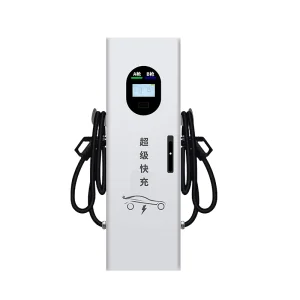
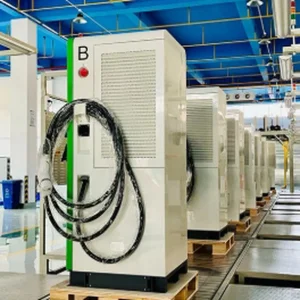
Enterprise-grade EV charging hardware integrated with intelligent power monitoring, rapid thermal diagnostics, and dynamic load management.
Analyzing the macro shifts in battery asset management, risk mitigation frameworks, and European regulatory compliance imperatives for global procurement managers.
The acceleration of international fleet electrification and utility-scale Energy Storage Systems (BESS) has transformed Battery Health Monitoring (BHM) from a passive diagnostic requirement into a critical pillar of enterprise risk management and Total Cost of Ownership (TCO) optimization. Global procurement teams across Automotive Original Equipment Manufacturers (OEMs), Charge Point Operators (CPOs), and logistics giants now evaluate BHM systems based on multi-dimensional performance metrics, real-time predictive capabilities, and strict conformity with European Economic Area (EEA) regulatory frameworks.
Modern commercial battery installations—whether deployed in 240kW ultra-fast EV public hubs or embedded within onboard 3.3kW OBC/DC-DC combo architectures—face severe operational stresses. Repeated high-C-rate fast charging, ambient temperature fluctuations, and cyclic mechanical strain accelerate chemical degradation modes such as lithium plating, electrolyte decomposition, and solid electrolyte interphase (SEI) growth. Procurement directors are consequently pivoting away from legacy, reactive threshold-alarm devices toward CE-certified, AI-assisted BHM hardware & software ecosystems capable of forecasting micro-structural degradation long before catastrophic failure occurs.
Connecting high-power charging infrastructure with multi-layered electrochemical health monitoring.
Online EIS monitoring captures high-frequency impedance spectrum shifts directly during DC fast-charging sessions, revealing real-time internal resistance ($\Delta R_{i}$) and charge-transfer resistance without requiring offline bench testing.
Iterative sensor integration measuring micro-volt differential cell voltages, localized multi-point skin temperatures, and high-side shunt currents to compute State of Charge (SoC) and State of Health (SoH) with >99.2% accuracy.
Edge-computed gas and thermal gradient detection algorithms interface instantly with EVSE power modules, cutting DC supply in sub-milliseconds if abnormal chemical off-gassing or thermal propagation curves are identified.
Seamless communication over OCPP 1.6J/2.0.1 and MQTT protocols streams battery telematics to cloud-based digital twin models, enabling physics-informed machine learning (PIML) for remaining useful life (RUL) forecasting.
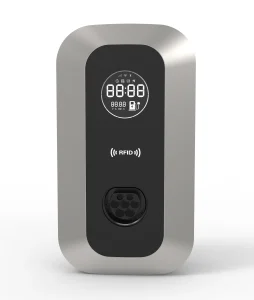
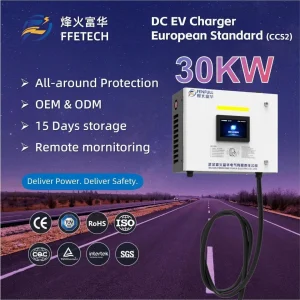
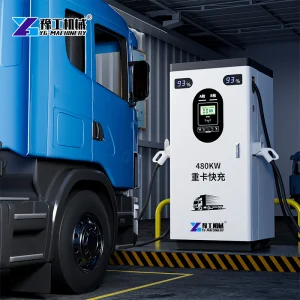
Commercial fast-charging equipment dynamically distributes current between dual charge outputs based on individual pack SoH data, avoiding over-stressing degraded battery modules in heavy duty EVs.
Fully tailored form-factor engineering allowing enterprise partners to embed custom CAN-bus protocol stacks, specialized enclosures, and specific low-voltage signal harnesses directly into factory lines.
Strategic hardware and software breakthroughs shaping the next decade of battery diagnostic systems and EV power management.
| Phase / Horizon | Diagnostic Hardware Architecture | AI & Algorithmic Frameworks | Standardization & CE Interoperability |
|---|---|---|---|
| Phase 1: Present State (2025–2026) | Edge BMS with Discrete Voltage Shunts, High-Precision Temperature Arrays, ISO15118 Din-Rail Integration. | Extended Kalman Filter (EKF) and Coulomb Counting for SoC; Coulombic Efficiency tracking for SoH. | CE RED (2014/53/EU), CE LVD (2014/35/EU), EN 61851-1, IEC 62196-2/3, ISO 26262 ASIL-B. |
| Phase 2: Near-Term Horizon (2027–2029) | Wireless BMS (wBMS) utilizing Ultra-Wideband (UWB) telemetry; Embedded On-Chip EIS co-processors. | Physics-Informed Neural Networks (PINN) running on edge AI chips; Predictive Lithium Plating Detection. | EU Battery Passport Mandate compliance, EN 62619 for industrial lithium packs, ISO 26262 ASIL-D. |
| Phase 3: Long-Term Vision (2030–2035) | Solid-State Battery Micro-Sensor Arrays embedded directly into electrolyte-electrode interfaces; Optical Fiber Sensors. | Autonomous Self-Healing BMS protocols; Federated Learning models across multi-terawatt global charging nodes. | Global Harmonized Zero-Trust Cyber-Physical Safety Standards; Fully Automated Battery Second-Life Passports. |
The progression toward ultra-high power density charging infrastructure (up to 360kW and beyond) mandates that battery health monitoring manufacturers evolve from simple voltage measurement cards into multi-disciplinary analytical systems. In high-traffic public installations, the dynamic exchange of battery health telemetry between the electric vehicle and the off-board fast charger allows the power supply equipment (EVSE) to adapt its current curve in microsecond steps, preventing localized hot-spot generation within the cell matrix.
How top-tier charging network operators, municipal transit systems, and commercial fleet managers deploy BHM tech.
In high-throughput environments like highway service plazas, charging equipment experiences non-stop duty cycles. Equipment featuring 40kW–240kW high-speed outputs must continuously interrogate vehicle pack health to maintain thermal stability during back-to-back fast charging sessions.
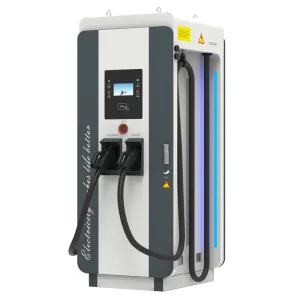
Fleet operators managing delivery vans and heavy trucks require precise State of Health tracking to calculate depreciation and schedule maintenance. Dual-gun high-power DC systems with integrated distribution distribution units ensure overnight charging without degrading fleet asset lifespan.
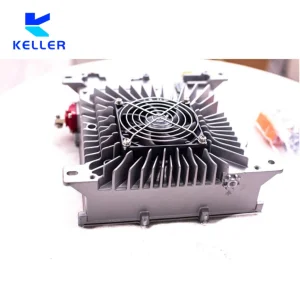
Compact 2-in-1 combo units (such as 3.3kW OBC + 1kW DC-DC converters) demand tight mechanical integration and high thermal efficiency. Continuous health monitoring at the onboard converter level ensures high-voltage to low-voltage step-down efficiency without excessive thermal loss.
A rigorous overview of European Directives, testing methodologies, and safety standards governing BHM and EVSE equipment.
To obtain European Conformity (CE) marking, manufacturers of Battery Health Monitoring systems and connected EV charging stations must demonstrate compliance with strict safety, electromagnetic, and telecommunications directives. Enterprise buyers must verify that equipment meets the following key European standards:
Ensures structural electrical safety, dielectric breakdown protection, clearance and creepage distance compliance for high-voltage DC paths under standard EN 61851-23.
Guarantees immunity against high-frequency industrial electromagnetic interference (EMI) and limits radiated emissions (EN 61000-6-2 / EN 61000-6-4) from switching power supplies.
Mandatory for all BHM devices equipped with wireless interfaces (Wi-Fi, 4G/5G, Bluetooth, RFID) ensuring spectrum efficiency and cyber-resilience against unauthorized intrusion.
Hangzhou Zap Charger Co., Ltd. is a professional EV charging solutions manufacturer specializing in high-performance connectors, cables, and smart charging systems for the global electric mobility market. Based in Hangzhou, the company benefits from a strong technology ecosystem and advanced manufacturing capabilities, enabling efficient production and continuous innovation.
Zap Charger offers a comprehensive product portfolio, including EV charging connectors, AC and DC charging cables, portable chargers, and intelligent charging systems designed for residential, commercial, and public infrastructure applications. All products are engineered with a focus on safety, durability, and compatibility, meeting international standards to ensure reliable performance across different regions and vehicle types.
Driven by a skilled R&D team, the company continuously develops smart charging technologies that enhance energy efficiency, optimize charging performance, and support the growing demand for sustainable transportation. Hangzhou Zap Charger Co., Ltd. also provides flexible OEM and ODM services, allowing clients to customize designs, specifications, and branding to suit specific market requirements.
With strict quality control, competitive pricing, and a customer-oriented approach, Zap Charger is committed to delivering innovative, efficient, and scalable EV charging solutions, building long-term partnerships with distributors, energy providers, and automotive industry clients worldwide.
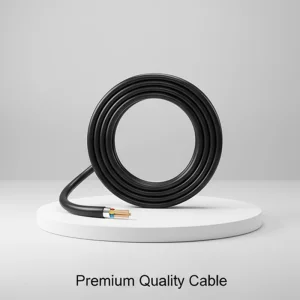
Complete product offerings engineered for rugged field performance, high conductivity, and international compatibility.

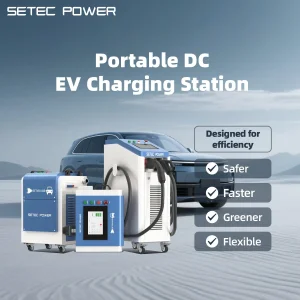
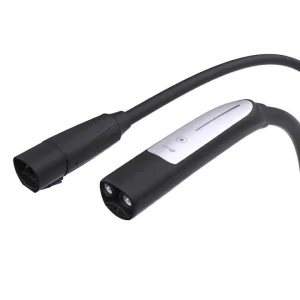
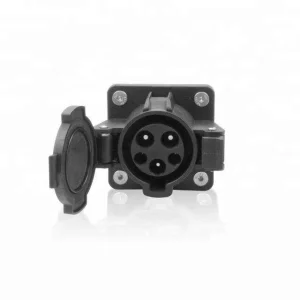
Expert technical answers to key procurement, engineering, and regulatory queries in the EV mobility sector.
CE certification confirms that the hardware meets essential European Economic Area (EEA) safety, health, and environmental standards. For BHM units, compliance involves the Low Voltage Directive (LVD) 2014/35/EU for electrical isolation, the EMC Directive 2014/30/EU for electromagnetic compatibility in high-noise charging environments, and the Radio Equipment Directive (RED) 2014/53/EU for wireless dynamic data transmission. Uncertified devices risk customs seizure, heavy regulatory fines, and voided commercial insurance policies.
Traditional State of Charge (SoC) and State of Health (SoH) methods rely on simple voltage-tracking and Coulomb counting, which struggle to account for non-linear hysteresis, aging degradation, and temperature variations. Online EIS injects micro-AC signal perturbations across a frequency spectrum (0.1 Hz to 10 kHz) to separate ohmic resistance ($R_\Omega$) from charge-transfer resistance ($R_{ct}$) and solid-electrolyte interphase ($R_{sei}$) impedance. This delivers micro-level physical insights into lithium plating and active material loss without disrupting battery operation.
Yes. Advanced BHM systems engineered by leading factories feature modular CAN-bus, RS485 (Modbus RTU), or Ethernet (OCPP 1.6/2.0.1) communication protocols. These permit seamless inline installation between the EVSE power conversion modules and the vehicle charging cable interface, enabling charge point operators (CPOs) to add real-time telemetry and predictive thermal cutoffs to legacy infrastructure.
Industrial applications vary widely in operating voltage (from 48V light EV platforms up to 800V/1000V commercial bus architecture), thermal environment, and mechanical form factors. OEM/ODM customization allows corporate clients to specify target enclosure IP-ratings (e.g., IP54 vs. IP67), custom wiring harness gauge configurations, localized regulatory safety features, and custom firmware integration for private cloud backends.
The EU Battery Regulation mandates transparent digital tracking of battery carbon footprint, recycled content, and health metrics throughout the asset lifecycle. CE-certified BHM systems equipped with cloud connectivity record persistent cycle life, deep discharge histories, high-temperature exposures, and internal resistance degradation. This immutable telemetry forms the backbone of the electronic Battery Passport required for second-life repurposing or recycling.
 Zap Charger