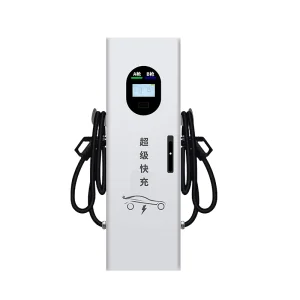
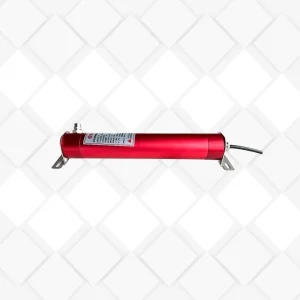
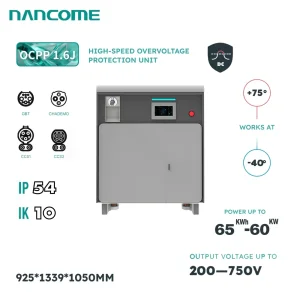
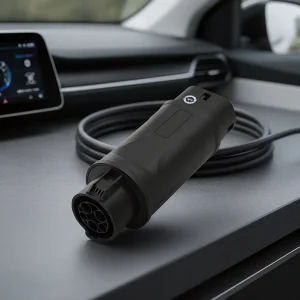
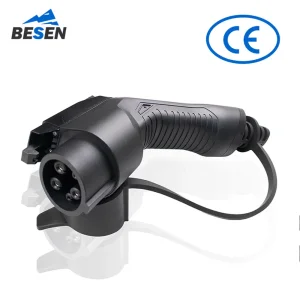
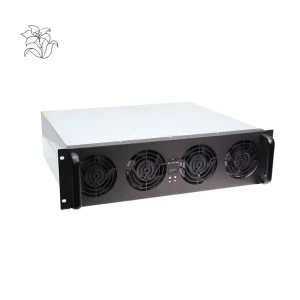
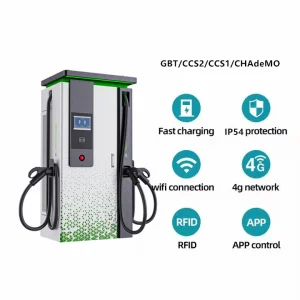
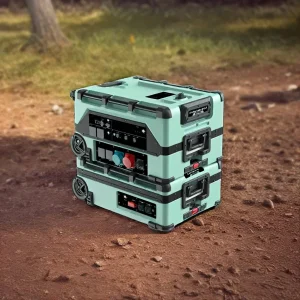
High-capacity DC fast chargers, intelligent management software, fire-suppression modules, and microgrid-ready storage hardware.
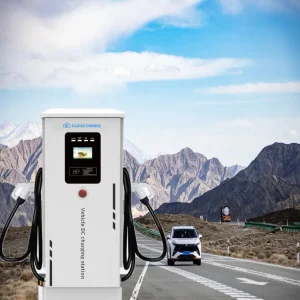
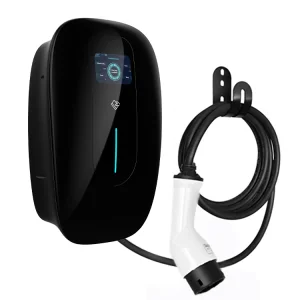
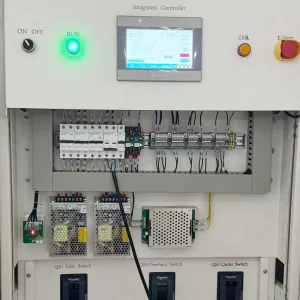
Hangzhou Zap Charger Co., Ltd. is a premier, full-stack EV charging solutions manufacturer specializing in high-performance connectors, cables, and smart charging systems for the global electric mobility market. Based in Hangzhou—China’s premier technological innovation hub—the company leverages an advanced industrial automation ecosystem, robust supply chain integration, and cutting-edge software engineering capabilities to power the global transition toward zero-emission transportation.
Zap Charger offers a comprehensive product portfolio tailored for residential, commercial, and utility-scale public charging infrastructure. Engineered from the ground up for safety, thermal efficiency, and broad vehicle interoperability, our production systems strictly adhere to global standards including ISO9001, ISO14001, CE, UL, RoHS, and IEC 62196. Driven by an elite R&D team with deep expertise in power electronics and IoT telemetry, we continuously advance energy management through AI-assisted dynamic load balancing and microgrid integration.
Analyzing grid congestion, high-power DC demand, microgrid integration, and the strategic advantages of China's charging supply chain.
The rapid global adoption of Electric Vehicles (EVs) has pushed utility grids and charging station architectures to an inflection point. As passenger EV fleets expand and commercial fleets (light-duty logistics, buses, heavy trucks) transition toward complete electrification, traditional single-point AC charging infrastructure is rapidly proving insufficient. Modern charging operators require high-density, high-efficiency **DC Fast Charging (DCFC)** networks capable of dynamically managing multi-megawatt operational loads without inducing severe grid penalties or localized voltage instability.
Simultaneous fast-charging sessions create massive current spikes. Without dynamic load management (DLM) and battery buffer integration, local distribution transformers risk overload, leading to exorbitant demand charges from utility companies.
Cross-regional deployments face fragmented hardware and communication protocols. Seamless integration of OCPP 1.6J/2.0.1, ISO 15118 (Plug & Charge), and diverse physical connectors (CCS1, CCS2, NACS, Type 2) is vital for hardware longevity.
Operating ultra-fast charging systems between 60kW to 350kW+ generates significant internal heat in both power modules and cabling systems, demanding active liquid cooling and integrated module-level fire suppression systems.
| Vector Metric | Legacy Standalone Chargers | Zap Charger Smart Network Solutions | Industry Operational Gain |
|---|---|---|---|
| Power Distribution | Fixed power allocation per plug (e.g., 60kW static) | Dynamic Load Allocation (50kW-350kW matrix balancing) | +40% increase in vehicle throughput per station |
| Grid Management | Uncontrolled power draw; high demand charges | Peak Shaving via Energy Storage System (ESS) integration | Up to 35% reduction in monthly electricity tariffs |
| Uptime & Reliability | Manual onsite maintenance; slow diagnostics | Remote AI Telemetry, cloud diagnostics, OTA updates | 99.2% guaranteed network operational uptime |
| Safety Protocol | Basic over-current & earth leakage protection | Non-pressurized battery fire suppression & thermal isolation | Zero catastrophic failure rate across installed sites |
A complete ecosystem designed to optimize power transformation, battery longevity, and microgrid independence.
At the heart of Hangzhou Zap Charger’s commercial hubs are our 50kW / 1000V high-efficiency ACDC power modules. Traditional charging piles utilize rigid power matrices that limit efficiency when charging vehicles with lower battery voltage architecture. Our hot-swappable, modular design uses Silicon Carbide (SiC) MOSFET switches, delivering wide constant power bands (300V-1000V DC). This ensures that whether a standard 400V passenger car or an advanced 800V heavy truck plugs in, the station delivers peak theoretical current without overheating or derating.
Furthermore, by decoupling internal power module blocks into matrix switching units, our station controllers automatically reallocate power modules in real-time. If a station has four 60kW modules (240kW total), it can instantly supply 240kW to one high-speed vehicle, or split power into 120kW+120kW, or 60kW x 4 dynamically based on SOC (State of Charge) curves.
Grid power limits are the number one barrier to installing ultra-fast EV hubs. Zap Charger solves this via integrated Energy Storage Systems (ESS) combined with dynamic supercapacitor units (such as our 350kW Dynamic Voltage Supercapacitor System).
During off-peak hours (nighttime), the storage battery charges from the grid at baseline cost. When multiple EV trucks arrive simultaneously during peak hours, the smart BMS triggers instantaneous discharge from both the Lithium Iron Phosphate (LFP) ESS bank and the supercapacitor system. The supercapacitors absorb high-frequency voltage spikes and deliver violent transient energy during initial surge demands, extending the overall lifecycle of the primary battery chemical storage by up to 300%.
Deploying engineered charging networks across diverse commercial, industrial, and urban microclimates.
Highway charging demands ultra-fast turnaround times. Utilizing our 240kW Modular DC Highway Fast Charging Systems, operators deliver 80% charge in under 15 minutes. Heavy-duty enclosures featuring anti-corrosion treatments ensure continuous operational readiness under severe weather conditions.
Electric delivery vans and heavy freight hubs require reliable scheduled overnight and depot fast-charging. Incorporating 60kW to 240kW DC stations tied into central software allows logistics managers to auto-schedule charging when electricity rates drop to off-peak minimums.
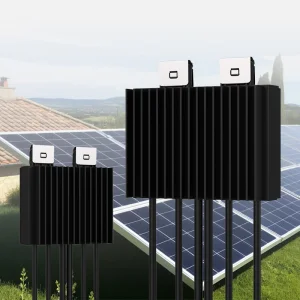
Combining 22kW Wall-Mounted AC Chargers, Type2-to-V2L dischargers, and Beny Solar PV Power Optimizers creates a closed-loop energy node. Commercial buildings can convert solar radiation into driving range while feeding excess vehicle power back to office loads during localized outages.
Navigating international markets requires strict adherence to regional safety standards and software interoperability protocols. Hangzhou Zap Charger Co., Ltd. designs every hardware product line with built-in multi-standard support:
Our products are manufactured, tested, and validated in certified environmental and EMC laboratories.
Pioneering next-generation charging infrastructure to support emerging energy paradigms.
Transitioning toward Megawatt Charging Systems (MCS) capable of delivering up to 1.2MW for heavy commercial transport. Liquid-cooled cable assemblies reduce weight while carrying 600A+ continuous current safely.
Commercializing advanced bidirectional AC and DC charging platforms that convert EV fleets into distributed energy storage resources, allowing vehicles to sell power back to the grid during severe electricity shortfalls.
Deploying neural network models on edge gateways to monitor power module component degradation, cable thermal dissipation patterns, and socket contact wear—predicting equipment failure before downtime occurs.
In-depth answers for turnkey project buyers, distributors, and engineering teams.
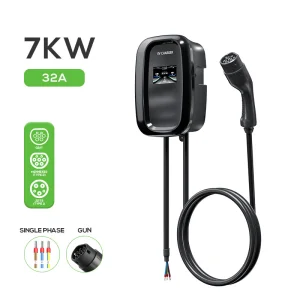
Explore our full range of AC chargers, adapters, solar rapid-shutdown units, and specialized charging accessories.
 Zap Charger