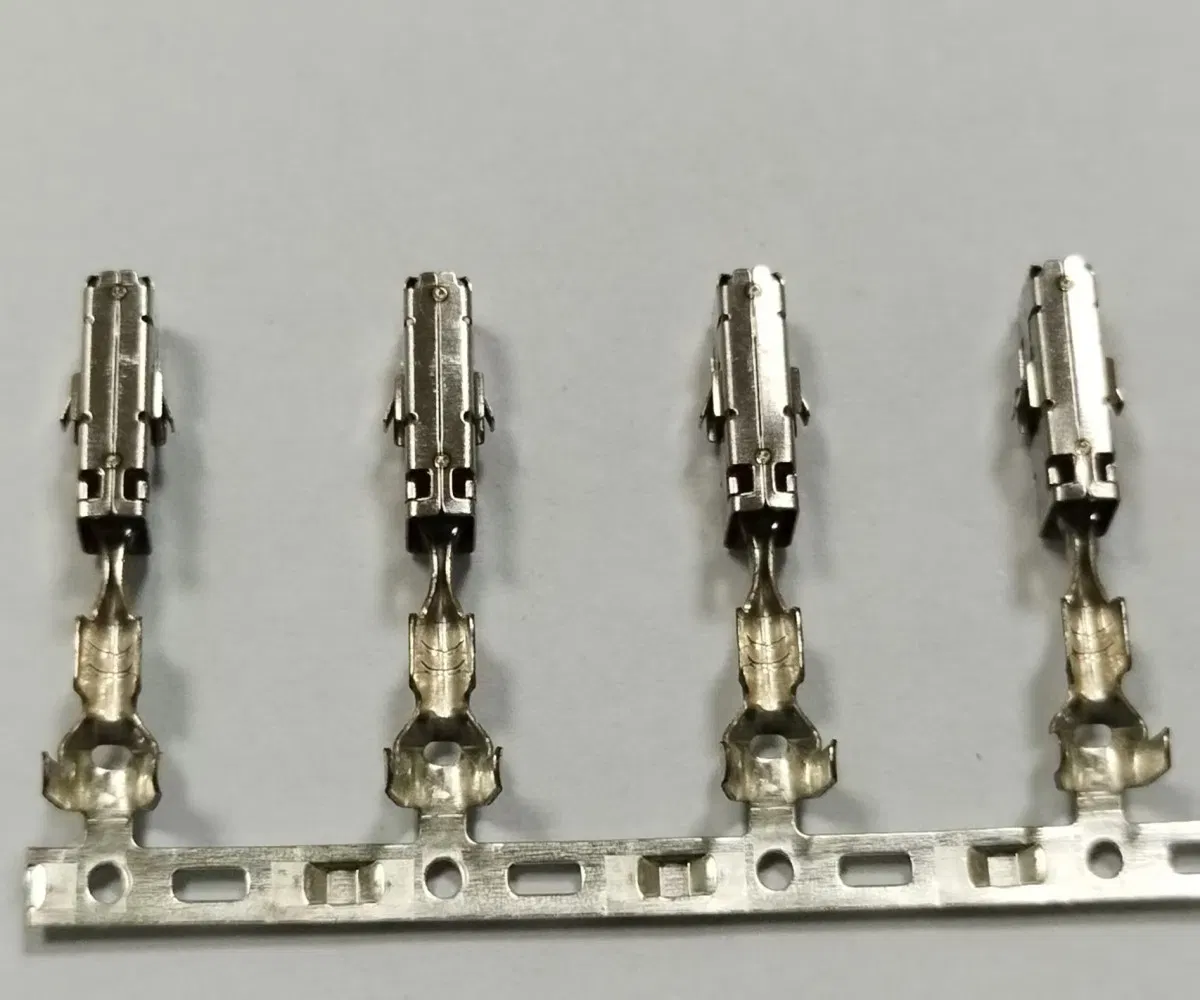
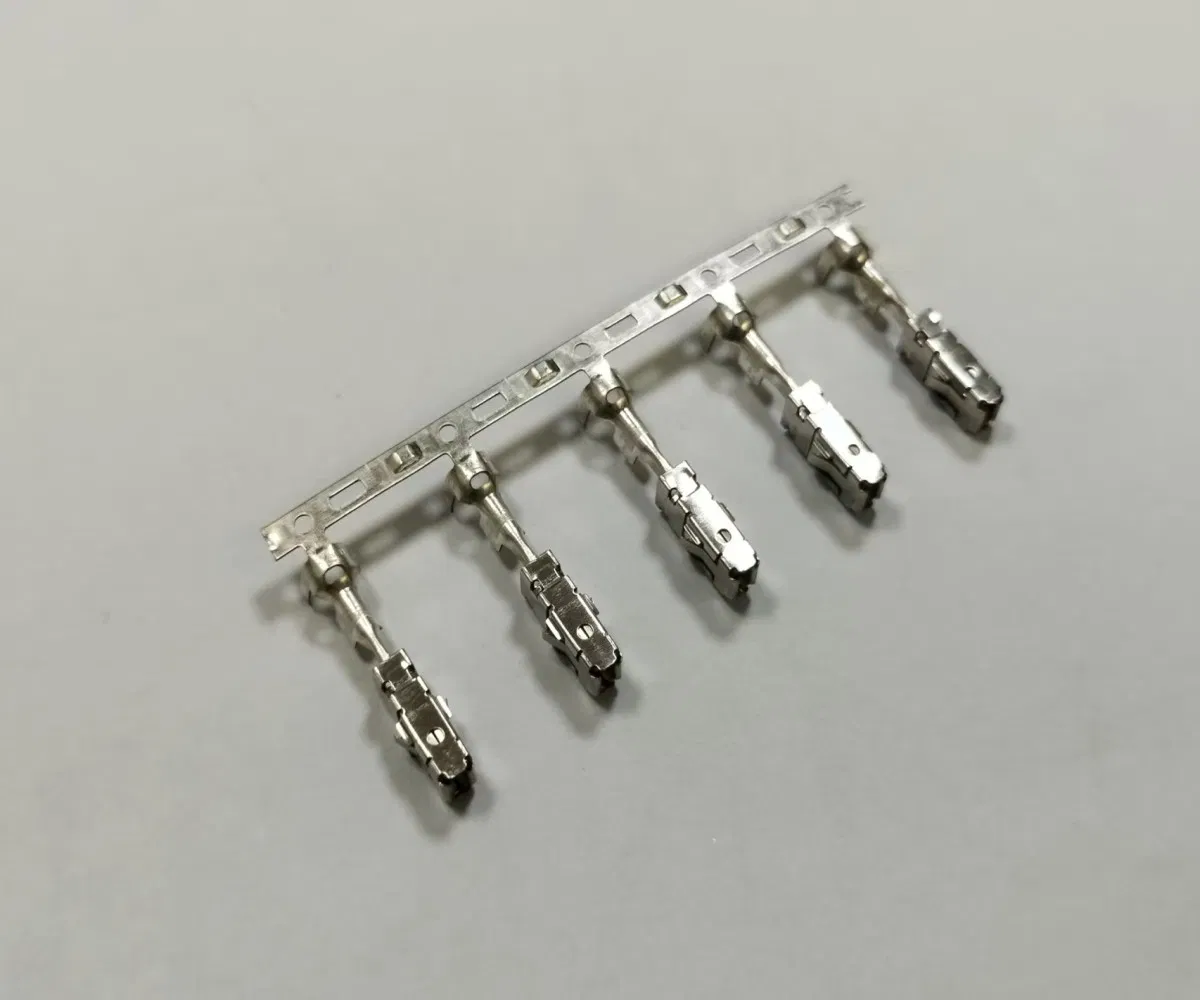
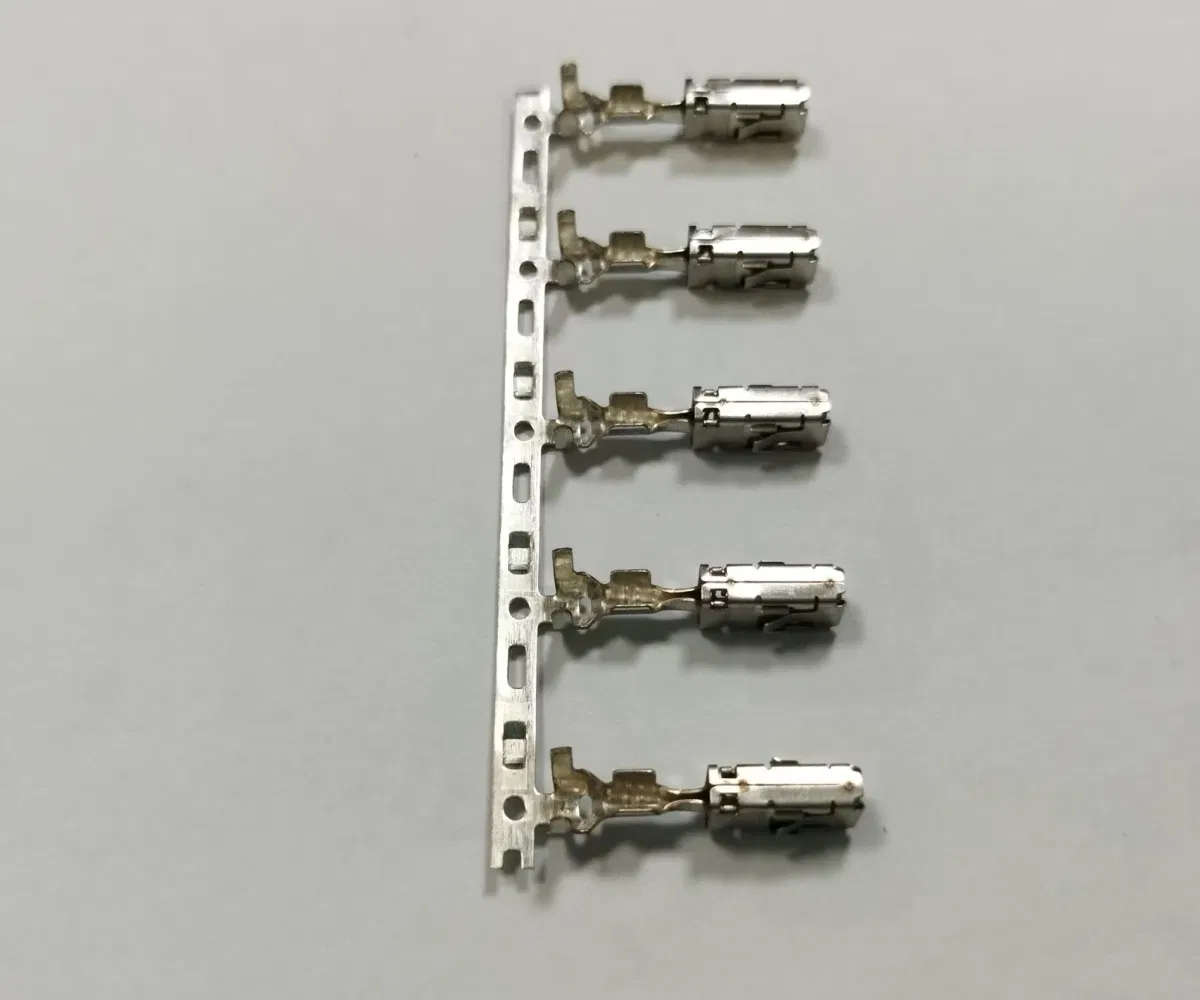
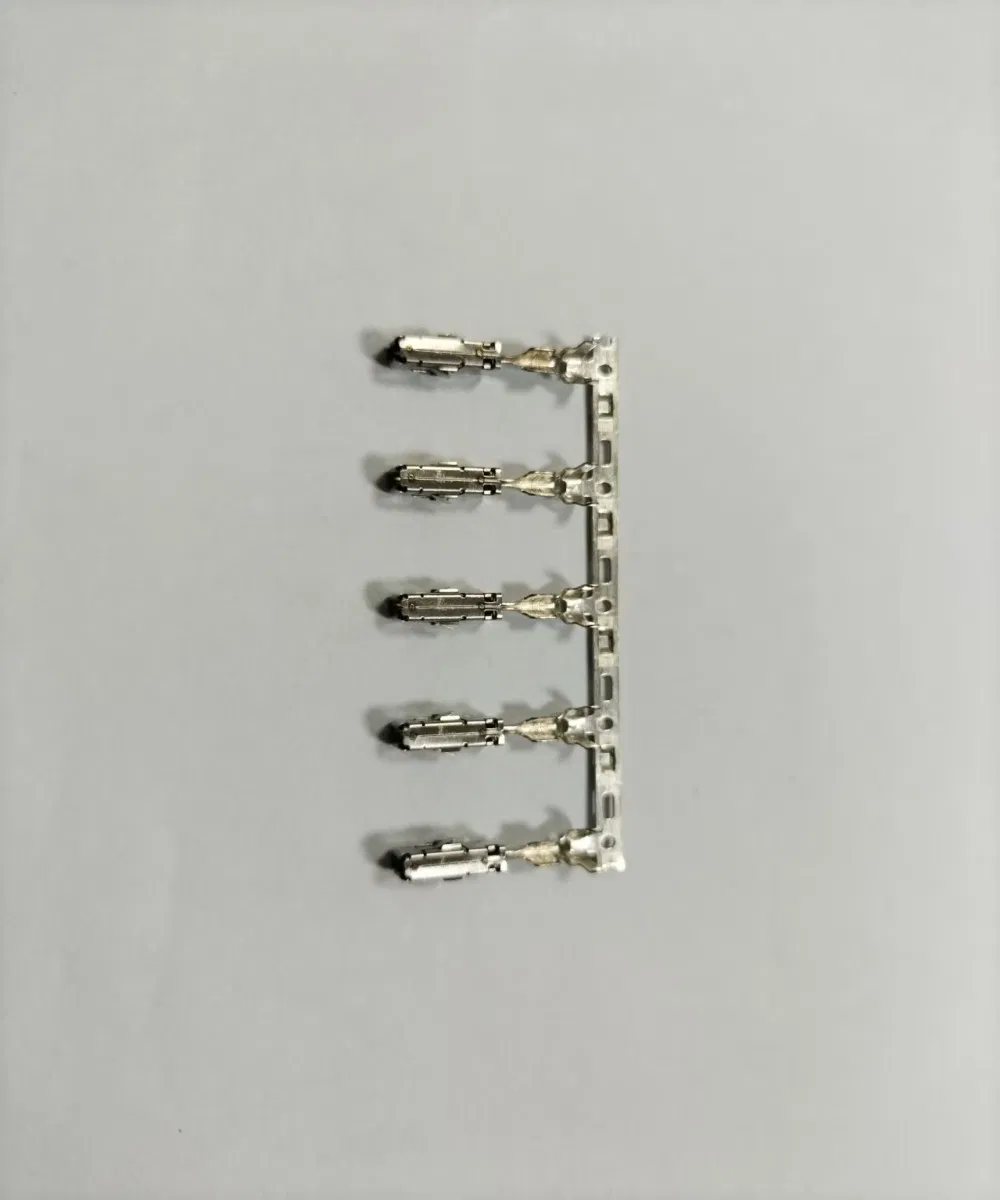
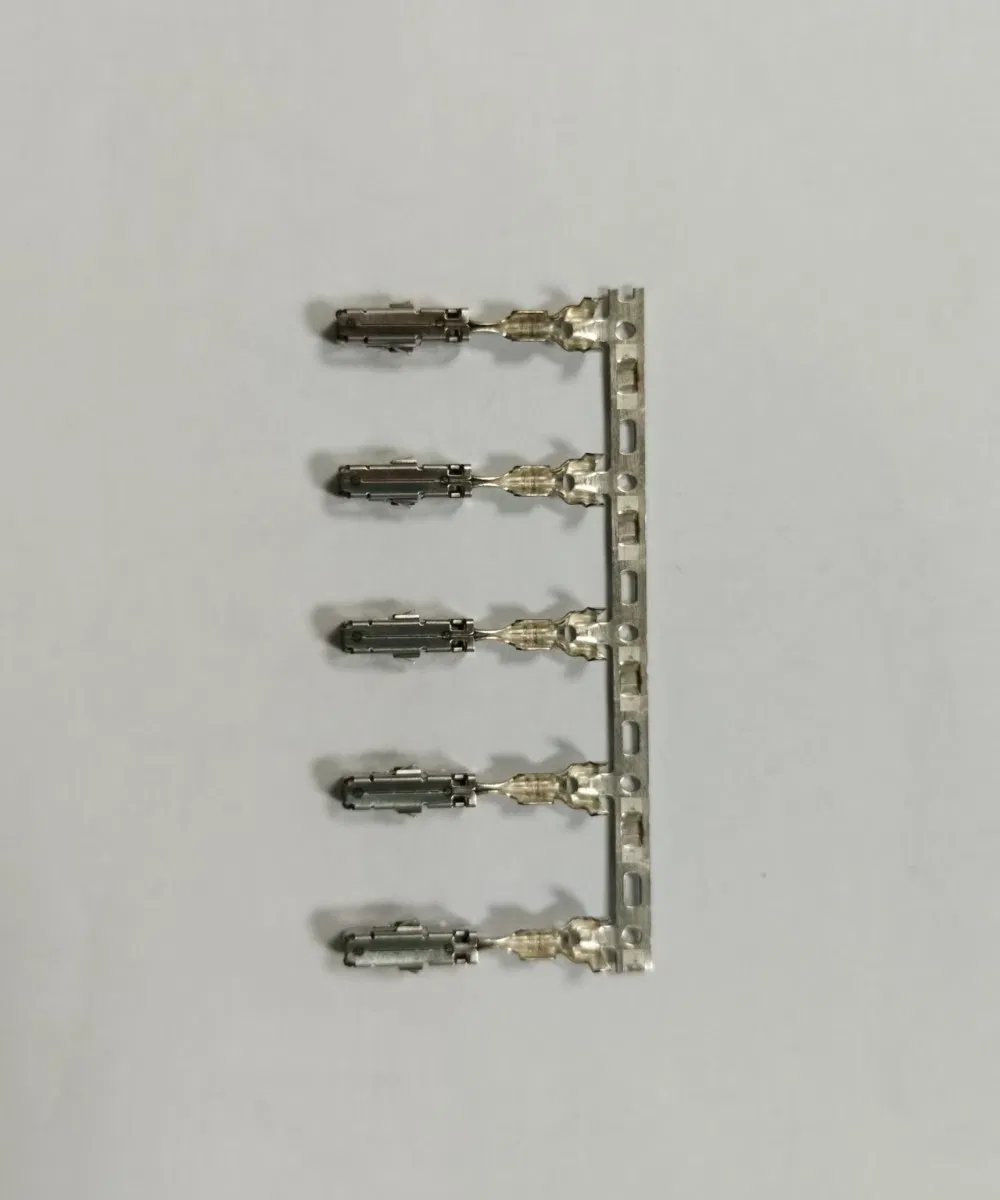
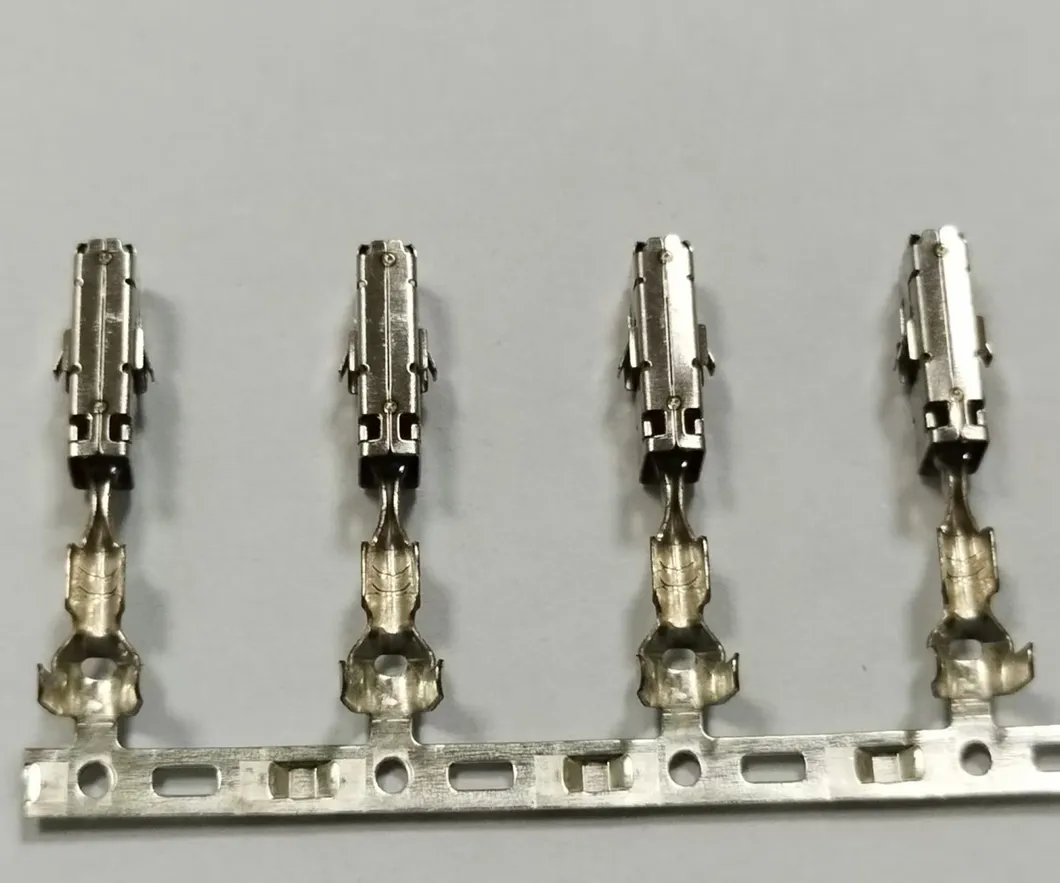
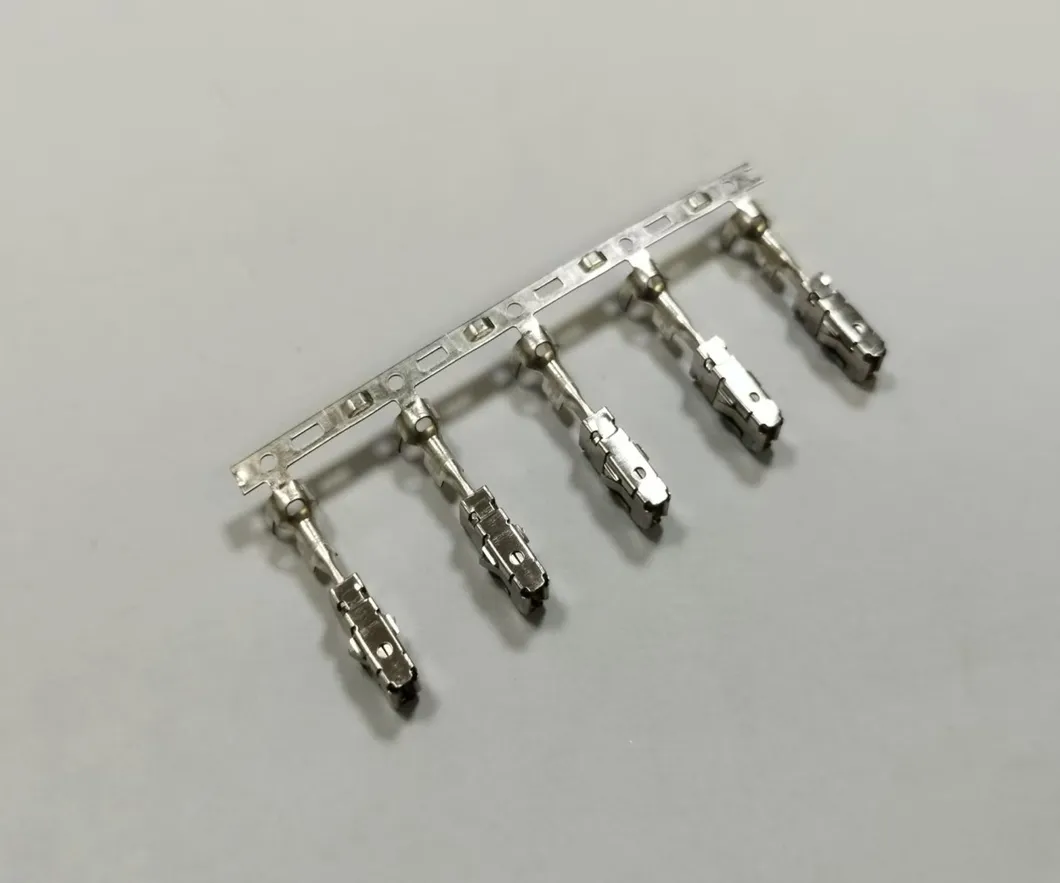
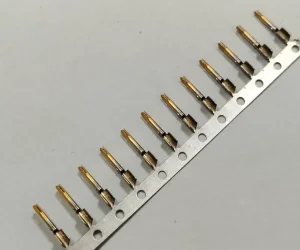
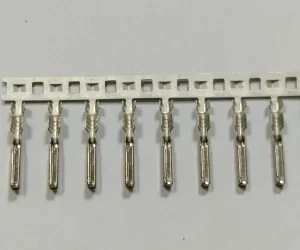
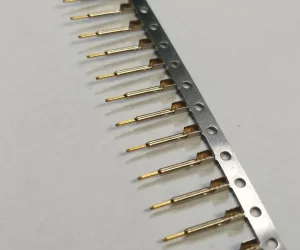
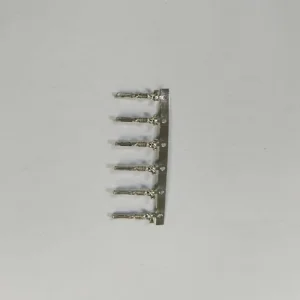
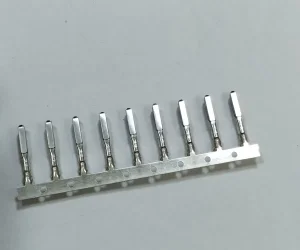
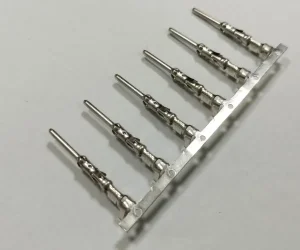
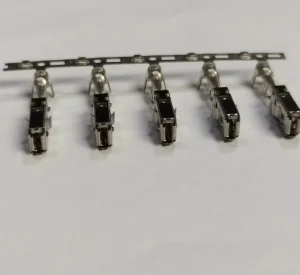
Ultra-Low Resistance Recycled Copper EV Terminals Battery Tunnel Certified

Still deciding? Get samples of $ !
Request Sample

Product Description

Basic Specifications
Model NO.
967542-1
Processing Type
Shaping Metal
Material
95% Recycled Copper + Graphene Nanocoating
Mould
Multistep Progressive Dies
Surface Processing
Tin Plating / Silver Plating
Tolerances
0.02mm
Current Density
780A Continuous @ 35mm²
Voltage Rating
2000V DC Isolation
Extreme Temp
-60°C to 250°C
Compliance
RoHS, Reach, Uscar-2, VW60330
Production
1,000,000 / Day
Origin
China
Product Overview
🚀
Planetary Boundary-Compliant EV Interconnects Engineered for climate-resilient electromobility, our terminals leverage aerospace-grade friction forging to unite dissimilar metals without welding. Certified for battery tunnel fire containment and arctic operation, delivering industry-leading 0.18mΩ resistance with closed-loop water cooling.
Performance Validation
Parameter Performance Validation Method
Contact Resistance0.18mΩ @ 500AIEC 60512-2
Thermal Runaway Delay+8.3 minutesGB/T 40432 Annex E
Cryogenic Flexibility500+ bends @ -50°CISO 21780:2020
Corrosion Lifetime25 years (Marine ENV)ISO 9227 Corrosion Atlas
Recycled Content95.7% ±0.3%XRF + Mass Balance Audit
Cooling Efficiency4.2kW Heat DissipationSAE J2938 Liquid Cooling
Vibration Stability0μΩ change @ 40GISO 16750-3 Annex B
Flame Propagation0mm (Self-Extinguishing)FMVSS 302
Proprietary Eco-Innovations

❖ Circular Material Flow

  • Blockchain-tracked recycled copper (SMM PAS 107)
  • Zero-process-water manufacturing
  • Take-back program with 100% recyclability

❖ Extreme Environment Design

  • Nanocrystalline grain prevents cryogenic embrittlement
  • Phase-change thermal buffers absorb 1500J/g
  • Self-sealing ceramic matrices at >180°C

❖ Direct Cooling Architecture

  • Laser-sintered microchannels (200μm width)
  • Compatible with glycol/water mixtures
  • 40% weight reduction vs. conventional terminals
Technical Differentiation
🔬

Friction Forging: Solid-state bonding at 85% below welding energy.

Intermetallic Barrier: Nano-engineered Ni-P diffusion layer.

Galvanic Isolation: Ceramic plasma electrolytic oxidation coating.

Application-Specific Solutions
EV Challenge Terminal Series Innovation
Battery Fire SafetyTFS-900Intumescent seals expanding at 150°C
Arctic OperationART-700Anti-icing graphene coating
Fast-Charging CorrosionFCX-1200Electrolyte-repellent surface topology
LightweightingLW-500Hollow-core titanium-copper hybrid
Manufacturing Excellence

Founded in 1991, our facility covers an area of 150 acres (100,000 square meters) and employs over 400 skilled professionals. We specialize in high-precision press machine manufacturing and metal stamping line solutions.

We provide comprehensive solutions in the stamping field, including terminals & connectors, shielding cases, nickel sheets, and precision metal processing widely used in electronics, new energy, and battery sectors.

Factory Overview
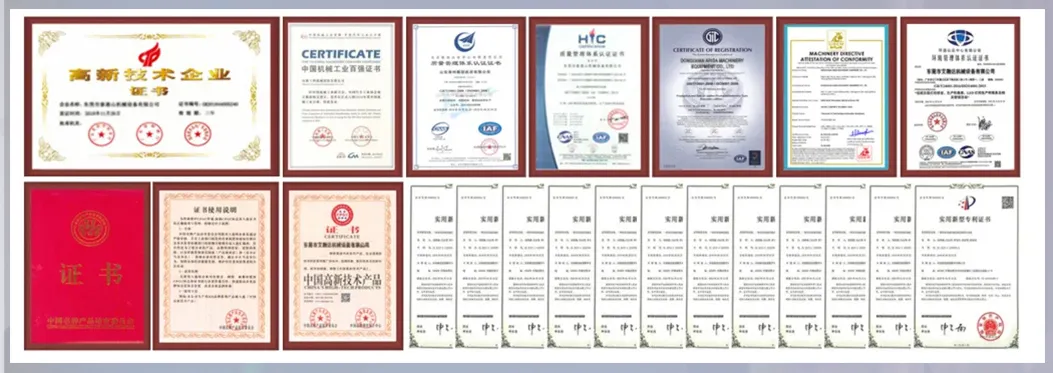
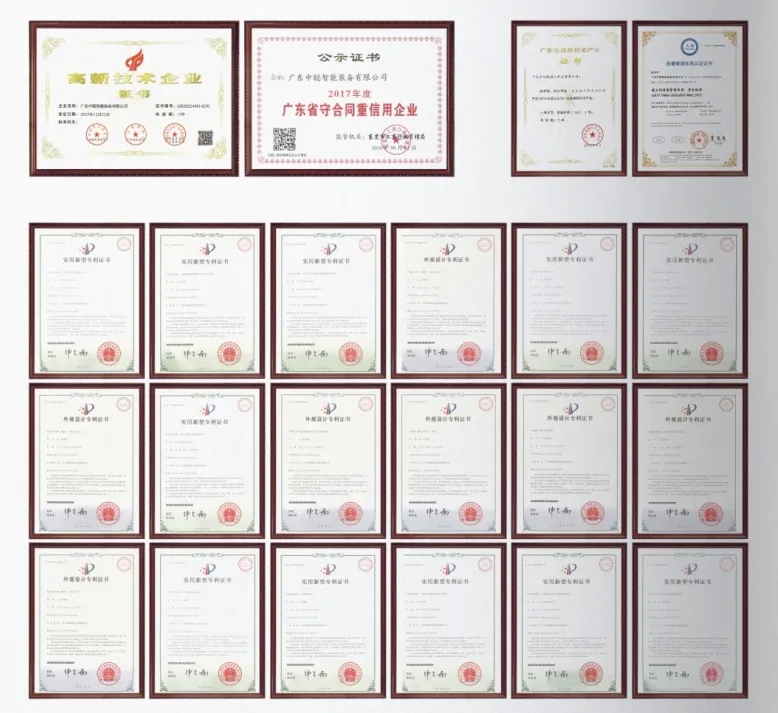
Certifications & Traceability
Frequently Asked Questions
What makes these EV terminals more sustainable than standard ones?
Our terminals are manufactured using 95.7% recycled copper tracked via blockchain and produced with a zero-process-water manufacturing cycle, significantly reducing the environmental footprint.
How does the liquid cooling integration work?
The terminals feature laser-sintered microchannels (200μm) compatible with glycol/water mixtures, allowing for 4.2kW of heat dissipation during high-speed charging.
Are these terminals reliable in extreme cold weather?
Yes, they are TÜV SÜD certified for extreme climates down to -60°C. The nanocrystalline grain structure prevents material embrittlement that typically occurs in cryogenic conditions.
What safety measures are in place for battery fire prevention?
The TFS-900 series includes intumescent seals that expand at 150°C to contain fire propagation, and they provide an 8.3-minute thermal runaway delay according to GB/T 40432 standards.
What is the expected lifespan in corrosive environments?
With our specialized graphene and plating coatings, the terminals offer a 25-year corrosion lifetime even in harsh marine environments, as validated by ISO 9227.
Can these terminals handle high-voltage DC systems?
Absolutely. They are designed with a 2000V DC isolation rating and can support 780A continuous current density, making them ideal for modern high-performance EV architectures.

Related Products